Tinariwen
Charts
Tracks
Playlists
SEO
Press Mentions
Overview
Not included in any known risky playlists
Monthly Listeners
Discography
Genres
Spotify has not assigned genres to this artist yet
Top Audiences
Top Listener Locations
 London, GB8,744
 São Paulo, BR5,747
 Paris, FR4,625
 Berlin, DE4,537
 Montreal, CA4,107
Playlist Summary
Playlist Movement
No activity found
This artist's playlist additions and removals will appear here.
Biography & Metadata
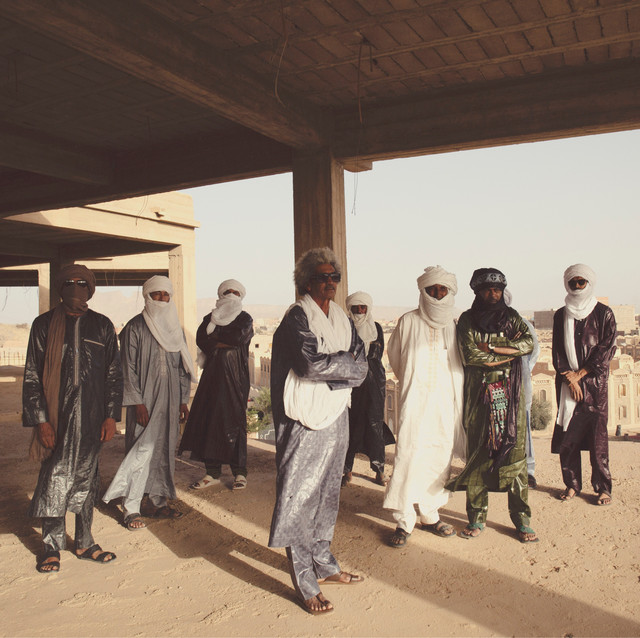
There is a depth of feeling in Tinariwen’s music that is universal. But to really understand the message of their songs, you need to understand where they’re from. Tinariwen are Tuaregs, children of a nomadic Berber tribe who have roamed the Saharan desert for thousands of years. Over recent centuries, colonialism has seen the Tuareg’s ancestral territory partitioned into distinct countries - Mali, Algeria, Libya, Niger. This drawing of borders has turned the Tuareg into ishumar, a displaced people in search of a homeland lost to them. Tinariwen’s music – a blend of West African traditional music and electrified rock’n’roll – speaks directly this feeling of longing: a sound that critics have called “desert blues”. Today, Tinariwen are a multi-generational, Grammy-winning band who count among their fans some of the biggest names in Western music. But you can trace their journey back to the late 1970s, where the group’s founding father Ibrahim Ag Alhabib – the son of a Tuareg rebel who had witnessed his father’s execution at the hands of the Malian government – built his own guitar using a tin can, a stick and a bicycle brake wire and taught himself to play. Drifting through towns and refugee camps in search of work, he met fellow Tuareg musicians, and around campfires they would write songs which they would play at parties or social gatherings. People called them Kel Tinariwen, which translates from their native Tamashek to “People of the Deserts” or “The Desert Boys”.
First discovered Jul 15, 2026, 7:36 AM