Eduardo Paniagua
Charts
Tracks
Playlists
SEO
Press Mentions
Overview
Not included in any known risky playlists
Monthly Listeners
Discography
Genres
Spotify has not assigned genres to this artist yet
Top Audiences
Top Listener Locations
 Madrid, ES645
 Mexico City, MX243
 Santiago, CL242Barcelona, ES236
 São Paulo, BR182
Playlist Summary
Playlist Movement
No activity found
This artist's playlist additions and removals will appear here.
Biography & Metadata
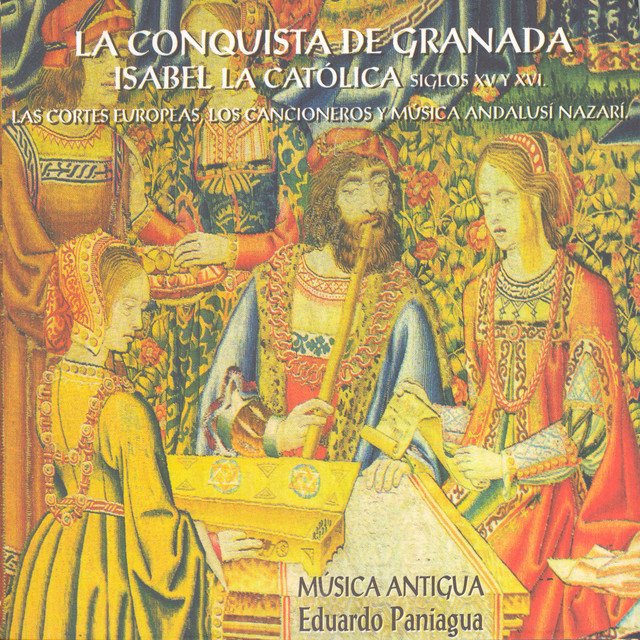
Eduardo Paniagua is among the more interesting musicians to have led dual careers: as a conductor, wind player, and percussionist he has received enthusiastic praise for his concerts and numerous recordings of music of Medieval Spain, but he is also quite an accomplished architect. One might further add businessman to his résumé, since he is the founder of the Spanish record label Pneuma. Paniagua was born in Madrid, Spain, in 1952. He came from a musical family and as a child displayed unusual musical talent. By 14 he was playing in Atrium Musicae, an ensemble devoted to various kinds of early music from Europe. In that group Paniagua performed with three brothers, Luis, Carlos, and Gregorio (the group's director). Eduardo played various kinds of flutes and percussion instruments in the ensemble and by 16 had made four recordings. Paniagua remained a member of Atrium Musicae from 1966 to 1983, a period during which he also founded two other groups devoted to early music, Calamus and Hoquetus, the former a vocal/instrumental ensemble focusing on Medieval Arab and Andalusian music and the latter a vocal group devoted to the performance of various Medieval works. In 1994 the busy Paniagua founded two more ensembles, Musica Antigua and Ibn Baya. Again, the repertory of these groups focused primarily on ancient music, with the latter group taking in Arab-Andalusian works as a specialty. By now Paniagua and his ensembles had developed a large following, both among the concert-going public and record buyers. Sony Classics signed Paniagua to a contract in 1995 that would yield 14 CDs by the end of 1998. Ten of them featured Musica Antigua in a series of Cantigas (Cantigas de Italia, Cantigas de Francia, et. al.), and four of them were with Ibn Baya in various Maluf (Andalusi) works. It was around this time, too, that Paniagua founded the label Pneuma, which he later used to re-release the 10 Cantigas recordings made for Sony. By 2006 Pneuma had issued more than 40 titles. In 1997 Paniagua was nominated for Best Classical Music Artist by the Academy of Spanish Music. He received the same nomination in 2000 and 2004. Paniagua's later recordings include El Camino De Santiago (2005), and Lo Mejor de las Cantigas (2006), both featuring collections of Cantigas made with Musica Antigua for his Pneuma label.
First discovered Aug 25, 2026, 10:25 AM