Franz Schubert
Franz Schubert
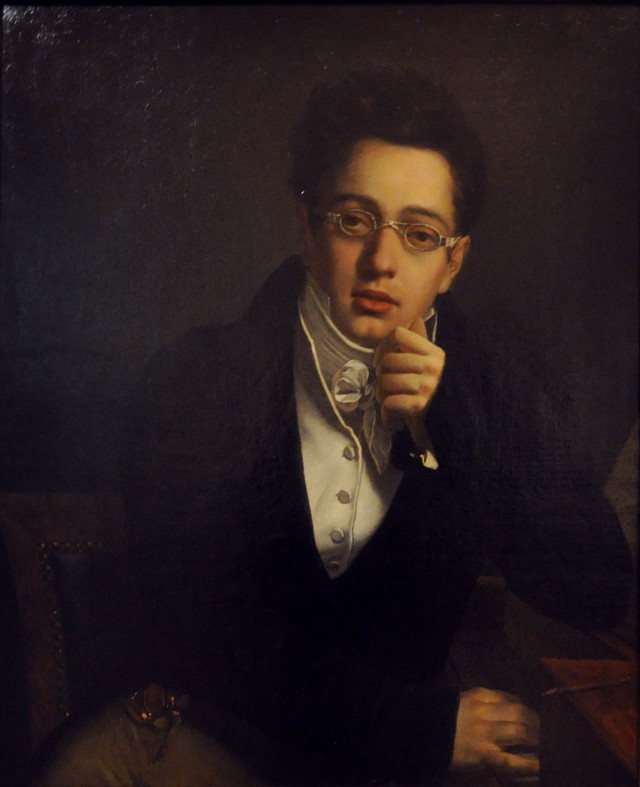
artist

Franz Schubert

Playlist Risks
Listeners
2,825,153/mo
Total Streams
13,883,091,668
Followers
1,241,427
Est. Royalties
$5,707 - $22,827/mo

Charts

Tracks

Playlists

SEO

Press Mentions

Overview

Monthly Listeners

Discography

Their catalog as it appears on their public Spotify artist profile
115
Albums
3
EPs
112
Singles
13,883,091,668
Total Streams

Top Audiences

Top listener locations as determined by Spotify

Top Listener Locations

MXMexico City, MX44,801
GBLondon, GB36,732
BRSão Paulo, BR33,990
TRIstanbul, TR28,710
CLSantiago, CL28,267

Playlist Summary

Overview of this artist's relationship with playlists
52,078
Playlist adds
3
High-risk playlist adds
39,464,041
Playlist follower reach (sum)
884,920+
Listeners from playlists
Estimated
31.3%
Of listeners from playlists
Estimated

Playlist Movement

Recent playlist add/remove events for this artist

No activity found

This artist's playlist additions and removals will appear here.

Biography & Metadata

Franz Peter Schubert was among the first of the Romantics, and the composer who, more than any other, brought the art song (lied) to artistic maturity. During his short but prolific career, he produced masterpieces in nearly every genre, all characterized by rich harmonies, an expansive treatment of classical forms, and a seemingly endless gift for melody. Schubert began his earliest musical training studying with his father and brothers. Having passed an audition, Schubert enrolled at the Stadtkonvikt that trained young vocalists to eventually sing at the chapel of The Imperial Court. Schubert began to explore composition and wrote a song that came to the attention of the institution's director, Antonio Salieri, who along with the school's professor of harmony, hailed young Schubert as a genius. In 1813, after Schubert's voice broke, he returned to live with his father, who directed him to follow in his footsteps and become a schoolteacher. Schubert begrudgingly complied and worked miserably in that capacity by day, while composing prolifically by night. He had written more than 100 songs as well as numerous symphonic, operatic, and chamber music scores, before he reached the age of 20. Schubert finally left his teaching position to dedicate himself completely to musical pursuits. During the summer of 1818, the young composer worked as a private music teacher to the aristocratic Esterházy family. When he left that post in the fall, Schubert lived a somewhat bohemian lifestyle, composing and spending time with a group of friends that acted as his personal support system. In 1820, Schubert was commissioned by two opera houses, the Karthnerthor Theatre and Theatre-an-der-Wein, to compose a pair of operas. He wrote Die Zwillingsbrüder, and Zauberharfe, both of which were unenthusiastically received. Schubert failed to secure a contract with a publisher, as none were willing to take a chance on a relatively unknown composer who wrote harmonically untraditional music. Schubert, along with the support of his artistic friends, published his own work for a collection of roughly 100 subscribers. These efforts, however, were financially unrewarding, and Schubert struggled to sustain himself. His work garnered little attention and contemporary composers dismissed his music as presumptuous and immature. In 1823, Schubert was elected to the Musikverein of Graz, as an honorary member. Though this brought no financial reward and was an inconsequential appointment, Schubert relished its slight recognition, and to show his gratitude, composed his famous Unfinished Symphony. Five years later, Schubert's music was featured at a concert at Vienna's Musikverein. His work was received quite enthusiastically, and to much critical acclaim. This marked the only time during the composer's life that he enjoyed such success. This seemed to provide Schubert with a renewed sense of optimism, and despite illness, the composer continued to produce at an incredible rate. He began to organize a scheme to increase his artistic popularity, by continuing to evaluate his work and progress as a musician, perhaps even planning to study harmony privately. Schubert's health did not improve, and he soon found himself at death's door. During the composer's last moments, he instructed his brother Ferdinand to ensure that he would be buried alongside Ludwig van Beethoven's grave. Schubert revered the legendary composer, and was grateful to him, as Beethoven had praised his work after hearing a selection of songs. Schubert also highly regarded the work of both Franz Joseph Haydn and Wolfgang Amadeus Mozart. Franz Schubert died of syphilis. Despite his short life, Schubert produced a wealth of symphonies, operas, masses, chamber music pieces, and piano sonatas, most of which are considered standard repertoire. He is known primarily for composing hundreds of songs including Gretchen am Spinnrade, and Erlkonig. He pioneered the song cycle with such works as Die Schöne Müllerin, and Winterreise, and greatly affected the vocal writing of both Robert Schumann and Gustav Mahler.

Updated Sep 3, 2026, 3:26 PM
First discovered Jan 9, 2026, 10:12 PM