Élisabeth Jacquet de La Guerre
Charts
Tracks
Playlists
Press Mentions
Google Rankings
Overview
Not included in any known risky playlists
Monthly Listeners
Series
- Monthly Listeners
- Listeners from Playlists
- Change
Discography
Genres
Spotify has not assigned genres to this artist yet
Top Audiences
Top Listener Locations
 Mexico City, MX473
 Madrid, ES463
 London, GB399
 Paris, FR343
 New York City, US326
Playlist Summary
Playlist Movement
Event | Playlist | Botted? | Position | Track | Happened at | |
|---|---|---|---|---|---|---|
Biography & Metadata
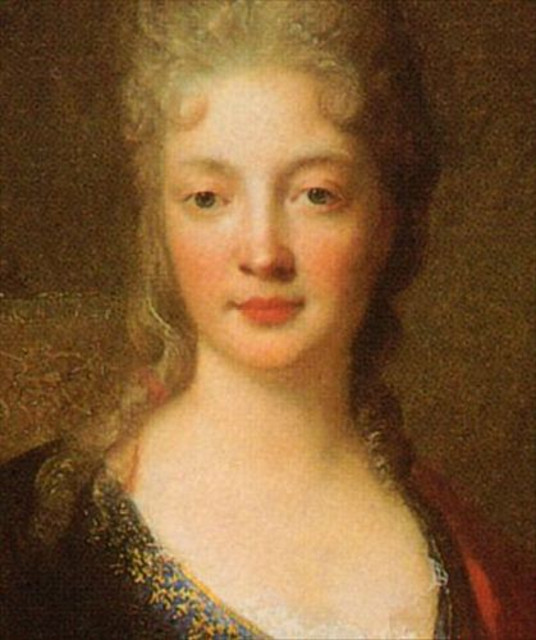
Elizabeth-Claude Jacquet de la Guerre was the most famous female composer of the Baroque era, known for several instrumental and vocal works. She was also a celebrated harpsichordist and one of King Louis XIV’s favorite performers. She was born into a wealthy family of musicians and instrument makers in Paris 1665. Her father, Claude Jacquet, worked as a church organist and harpsichord maker and was also the source of her earliest musical instruction. At the age of five, she began performing for King Louis XIV at the palace of Versailles, and eventually earned the title "la petite merveille" ("the small wonder"). She remained a regular musician in the king’s court until her teens, when the king decided to provide her with the best possible education, supervised by his mistress, Françoise-Athénaïs, marquise de Montespan. In September 1684 Jacquet married organist Marin de la Guerre, and they moved back to Paris. She was very successful as a performer and she also taught and composed. By 1687 her first published work was printed, le Premier livre de pieces de clavessin. She also composed a ballet in 1691, Les jeux à l'honneur de la Victoire, which is now lost, and an opera in 1694, Céphale et Procris. The next decade of her life was very difficult with the passing of her husband, parents, brother, and her only son at the young age of ten. However, she kept composing and performed a series of concerts at her home that proved to be wildly popular. She also composed her violin sonatas, and Pièces de clavecin qui peuvent se jouer sur le violon during this period. From 1708 to 1721, in a departure from instrumental music, she composed many vocal works, including 12 sacred cantatas, an additional three secular cantatas on mythological subjects, and also a Te Deum, which is unfortunately lost. Jacquet gradually stopped performing and retired in 1717 but continued to compose into her final years. ~ RJ Lambert, Rovi
First discovered Sep 12, 2026, 1:07 AM