Leningrad
Charts
Tracks
Playlists
SEO
Press Mentions
Overview
Not included in any known risky playlists
Monthly Listeners
Discography
Genres
Spotify has not assigned genres to this artist yet
Top Audiences
Top Listener Locations
 Minsk, BY15,350
 Frankfurt am Main, DE15,184
 Kyiv, UA13,057
 Riga, LV11,870
 Warsaw, PL10,160
Playlist Summary
Playlist Movement
No activity found
This artist's playlist additions and removals will appear here.
Biography & Metadata
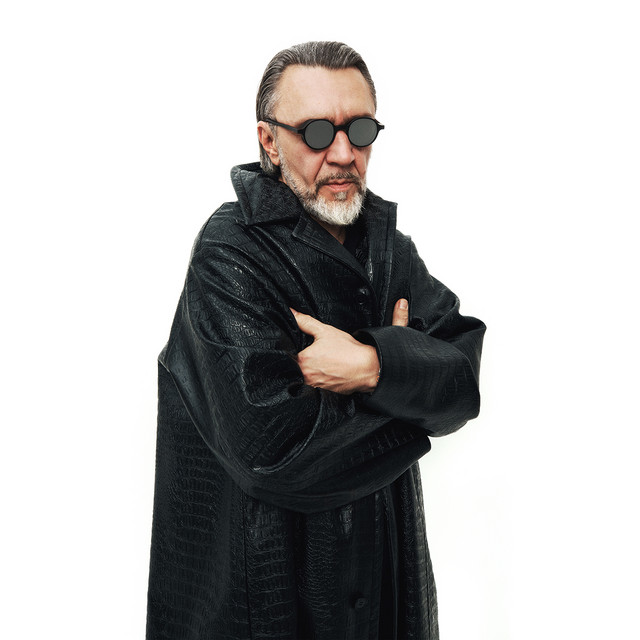
In impact and tone,Leningrad frontman Sergey Shnurov self-effacingly likens his music to pornography. Their chief innovation, the incorporation of non-normative language such as slang and curse words into their lyrics, is unexceptional enough in execution, brutishly enunciated by Shnurov and accompanied by a large cast of musicians toting hefty horn and percussion instruments. But, like with the work of postmodernist authors Vladimir Sorokin and Victor Pelevin of the same period, audiences found emancipation in their curses and colloquialisms, picked from the inexorable grime of their hometown, St. Petersburg. And they weren't swearing just to swear; bad words cursed a society too closed to allow artists to dabble in the political, generously doling out criticism and ska-polka. Leningrad had clawed and elbowed its way into the mainstream, and though their outsider's message is confounded by the group's enormously marketability, they've made room for others to follow in their irreverent image. Leningrad was formed in 1997 in St. Petersburg bySergey Shnurov, two years later recording its debut, Pulya (Bullet), at the hands of legendary musician Leonid Fedorov, of the group Auktsyon. Pulya showed the influence of Auktsyon's theatrical, horn-heavy madness and also the legacy of Russian chanson music. The band did not enjoy immediate success, but became a local favorite through frequent performances. Only after original singer Igor Vdovin left the group did they distinguish their sound through Shnurov's signature growl. A sociable presence on-stage, they performed with a jolly pluralistic cast of local musicians playing the tuba, saxophone, trombone, bass, guitar, drums, and bass drum, sometimes including accordion, contrabass, balalaika, xylophone, or musical saw. Their 1999 release, Mat Bez Elektrichestvo (Curses Without Electricity), echoed Soviet kitchen gatherings called kvartirniks, infused with vodka-induced obscenity. 2000s Dachniki was their biggest album to date, and saw the group replacing tendencies towards the folky with an edgier sound. In 2001, Shnurov fostered a short-lived side project called Tri Debila (Three Retards) and in 2002 Leningrad joined artistic forces with the ska-punk band Spitfire recording Piraty XXI Veka (Pirates of the 21st Century), a musical gnashing of the teeth over contemporary societal conditions and communist's nostalgia. Leningrad had become an establishment, frequently gracing TV and radio hit parades, and performing for audiences in the United States and Europe, often with more than 20 musicians on-stage. In 2003, Shnurov released personal projects and budding St. Petersburg indie rock talents on his own label,ShnurOK. That same year, Moscow mayor, Yuriy Luzkhov forbid the group from playing in his city, succeeding only in inciting thousands of fans to embark on musical pilgrimages to see the group perform in St. Petersburg. The next three years marked a period of immense creativity for the group, which turned out three albums: 2003's Dlya Millionov (For Millions), 2004's experimental album Baborobot (Robot Babe) and Huinya (Crap), a collaboration with British group, the Tiger Lillies. For 2005's album, Hleb, Shnurov barked out more socially disparaging text and mockery, but went back to basics for 2006's Babie Leto (Indian Summer), a rasping exaltation of bablo (bling), bukhlo (booze), and babi (bitches). 2007's Avrora (Aurora) served up more jagged wit and energy, missiles pointed at the bigwigs in Moscow. ~ Sabrina Jaszi, Rovi
First discovered Apr 2, 2024, 9:35 AM