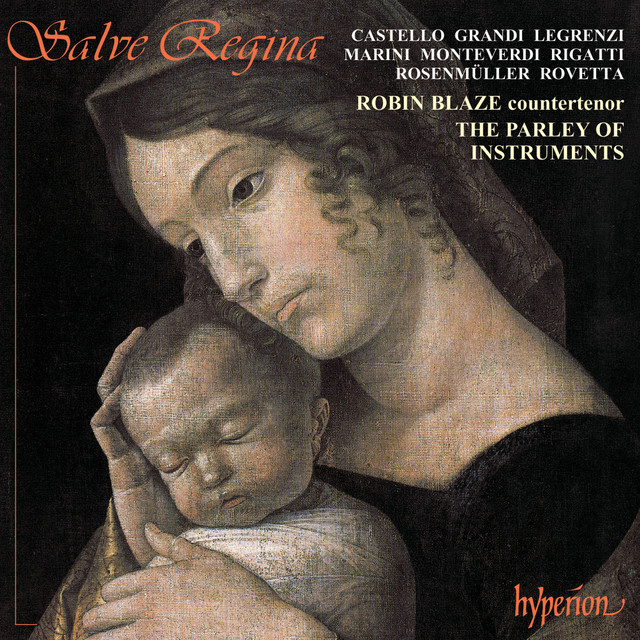
Alessandro Grandi
Charts
Tracks
Playlists
SEO
Press Mentions
Overview
Not included in any known risky playlists
Monthly Listeners
Discography
Genres
Spotify has not assigned genres to this artist yet
Top Audiences
Top Listener Locations
 Madrid, ES72
 Paris, FR55
 Mexico City, MX54
 Amsterdam, NL36
 London, GB35
Playlist Summary
Playlist Movement
No activity found
This artist's playlist additions and removals will appear here.
Biography & Metadata
Alessandro Grandi is considered by many the most important Italian composer, after Monteverdi, from the first half of the sixteenth century. He is best known for his church music, secular cantatas, and arias. Grandi may have been born in Ferrara or in the vicinity of Venice, but almost certainly not in Sicily as once claimed. Not much is known about his early years, but his activities began to emerge more clearly as the seventeenth century approached: between the late 1590s (1597-1600) and 1617 he held at least four positions of note. The first (maestro di cappella) was at a religious fraternity in Ferrara, the Accademia della Morte, while the second, at San Marco Church in Venice, was as giovane di coro, beginning around 1605; the third (maestro di cappella), beginning in 1609-1610, at the Accademia dello Spirito Santo, another religious fraternity in Ferrara; and the final one (maestro di cappella) was at the Ferrara Cathedral, from 1615 to 1617. In the midst of this activity Grandi published his first volume of motets (1610). The influence of Gabrieli (a composer whose music helped shape Grandi's writing style) is most noticeable in the Mass setting contained in this initial effort. In 1617 Grandi accepted a position as singer at San Marco in Venice, and a year later was appointed voice teacher at a local seminary. But his most prestigious and financially rewarding post came when he was elevated to Monteverdi's assistant at San Marco in November 1620. Grandi held this position until 1627, when he secured an appointment at Santa Maria Maggiore, in Bergamo, as maestro di cappella, a post that required large-scale compositions, just the opposite kind of works popular in Venice around 1620, the year Grandi began to conform to tradition there by turning out his first solo cantatas and arias. Grandi remained busy composing throughout the period 1610-30, producing mostly small-scale motets, except after his 1627 Bergamo appointment. Most of these motets appeared in five additional volumes, the last published in 1630. Through these works Grandi became instrumental in helping establish the concertato style in church music that would soon become prevalent. In 1629 Grandi published the first of three large volumes of church music -- the result of his Bergamo appointment -- his last important publications. He died in 1630, a victim of the bubonic plague.
First discovered Aug 26, 2026, 4:26 PM