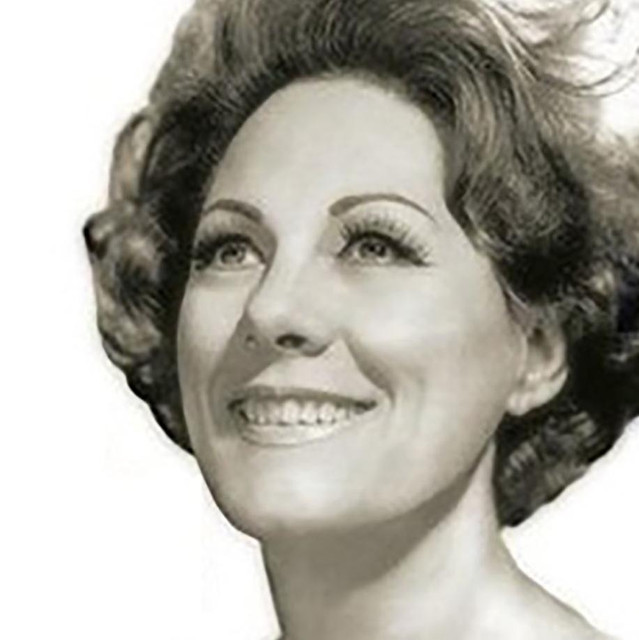
Renata Tebaldi
Charts
Tracks
Playlists
Press Mentions
Google Rankings
Overview
Not included in any known risky playlists
Monthly Listeners
Discography
Genres
Spotify has not assigned genres to this artist yet
Top Audiences
Top Listener Locations
 Mexico City, MX1,859
 Madrid, ES1,780
 Santiago, CL1,157Barcelona, ES1,030
 London, GB995
Playlist Summary
Playlist Movement
Event | Playlist | Botted? | Position | Track | Happened at | |
|---|---|---|---|---|---|---|
Biography & Metadata
Renata Tebaldi faced great physical difficulties when she contracted polio at the age of three. Overcoming her disability, she later studied voice at the Arrigo Boito Conservatory in Parma with the great soprano Carmen Melis. Her first public appearance came in 1944 as Elena in Boito's Mefistofele at the Teatro Municipale in Rovigo. That same year she repeated the role in Parma and Venice. Arturo Toscanini heard her and asked her to participate in the reopening of the Teatro alla Scala in Milan in 1946. She also sang the Verdi Requiem there that year, as well as Mimì in La bohème and Eva in Die Meistersinger (in Italian). From 1949 to 1954, she sang frequently at La Scala, but she left over bitter feelings regarding Maria Callas, her only real rival as prima donna of the company. During this time, she also sang regularly in many of the important opera houses in Italy. She was also heard in South America and was a favorite in Buenos Aires and Rio de Janeiro. In 1950, she debuted at the Royal Opera, Covent Garden in London as Desdemona in Otello and at the San Francisco Opera as Aida. She was a regular guest at the Lyric Opera of Chicago. In 1955, she made her Metropolitan Opera debut as Desdemona and remained a favorite of the New York public for the next 20 years. She sang most her important roles in New York including Mimì in La bohème, Maddalena in Andrea Chenier, Tosca, Aida, Violetta in La Traviata, Manon in Manon Lescaut, Adriana Lecouvreur, La Gioconda, and Alice Ford in Falstaff. These are the same roles that she sang at opera houses in Vienna, Berlin, Paris, Barcelona, and Amsterdam. In the early years of her career, Tebaldi sang in many operas which she was not to repeat later including Handel's Giulio Cesare, Rossini's L'Assedio di Corinto, Verdi's Giovanna d'Arco, Wagner's Lohengrin and Tannhäuser, Mozart's Don Giovanni (Donna Elvira), and Spontini's Olympia and Agnes di Hohenstaufen. Besides her work in opera, Tebaldi appeared in recital and in concerts. Her recital programs consisted primarily of Italian songs and operatic arias. On the concert stage, besides the Verdi Requiem she also sang Mozart's Requiem, Rossini's Stabat Mater and Bach's St. Matthew Passion. Tebaldi's voice was a very powerful spinto soprano of great beauty. She was able to sustain a long lyric line with little trouble and in the early years of her career she exhibited good control of florid passages. The extreme top of the range was lovely when singing softly, but tended to lose pitch when sung at full volume. Toscanini considered her voice one of the most beautiful in the twentieth century, and early in her career some critics felt that she was slighting the drama. She went through a vocal crisis in the early 1960s, but returned having restudied her voice and added more dramatic roles such as Gioconda and Minnie in La fanciulla del west to her repertoire and at the same time becoming a more intense actress. She was very careful about the roles she sang and how often she would sing. Rudolf Bing, manager of the Metropolitan Opera is quoted saying that "Tebaldi has dimples of steel," a sentiment echoed by many other managers. Her many recordings document the range of repertoire she sang and the great artistry she displayed.
First discovered Aug 20, 2026, 11:06 PM