Luis Russell
Charts
Tracks
Playlists
Press Mentions
Google Rankings
Overview
Not included in any known risky playlists
Monthly Listeners
Series
- Monthly Listeners
- Listeners from Playlists
- Change
Discography
Top Audiences
Top Listener Locations
 Los Angeles, US37New York City, US34
 London, GB25
 Panama City, PA24Chicago, US23
Playlist Summary
Playlist Movement
Event | Playlist | Botted? | Position | Track | Happened at | |
|---|---|---|---|---|---|---|
Biography & Metadata
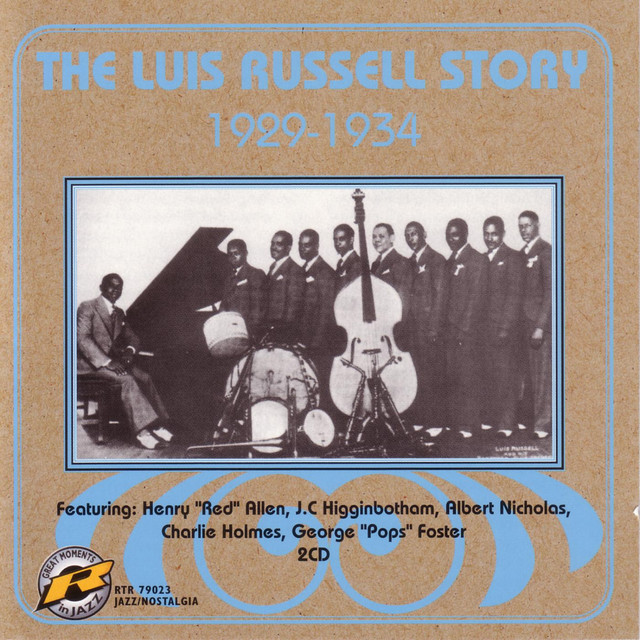
Luis Russell led one of the great early big bands, an orchestra that during 1929-1931 could hold its own with nearly all of its competitors. Unfortunately, his period in the spotlight was fairly brief and, ironically, Russell fell into obscurity just as the big band era really took hold. Russell studied guitar, violin, and piano in his native Panama. After winning 3,000 dollars in a lottery, he moved with his mother and sister to the United States where he began to make a living as a pianist in New Orleans. In 1925 Russell moved to Chicago to join Doc Cook's Orchestra and then became the pianist in King Oliver's band. He was with Oliver when the cornetist relocated to New York before leading his own band at the Nest Club in 1927. Russell had recorded seven songs at two sessions as a leader in 1926 with his Hot Six and Heebie Jeebie Stompers. By 1929 his ten-piece band (which included several former Oliver sidemen) boasted four major soloists in trumpeter Red Allen, trombonist J.C. Higginbotham, altoist Charlie Holmes, and clarinetist Albert Nicholas; the other trumpeter, Bill Coleman, ended up leaving because of the lack of solo space. In addition, Russell, a decent but not particularly distinctive pianist, was part of one of the top rhythm sections of the era along with guitarist Will Johnson, the powerful bassist Pops Foster, and drummer Paul Barbarin. During the next couple of years Luis Russell's band recorded a couple dozen sides that (thanks to the leader's arrangements) combined the solos and drive of New Orleans jazz with the riffs and ensembles of swing; some of these performances are now considered classics. The band also backed Louis Armstrong on a few of his early orchestra recordings. But after a few commercial sides in 1931, Luis Russell only had one more opportunity to record his band (a so-so session in 1934) before Louis Armstrong took it over altogether in 1935. For eight years, the nucleus of Russell's orchestra primarily functioned as background for the great trumpeter/vocalist, a role that robbed it of its personality and significance. From 1943-1948, Russell led a new band that played the Savoy and made a few obscure recordings for Apollo before quietly breaking up. He spent his last 15 years, before dying of cancer in 1963, largely outside of music, running at first a candy shop and then a toy store. Fortunately most of Russell's early recordings have been made available on CD by European labels. ~ Scott Yanow, Rovi
First discovered Oct 7, 2026, 4:09 AM