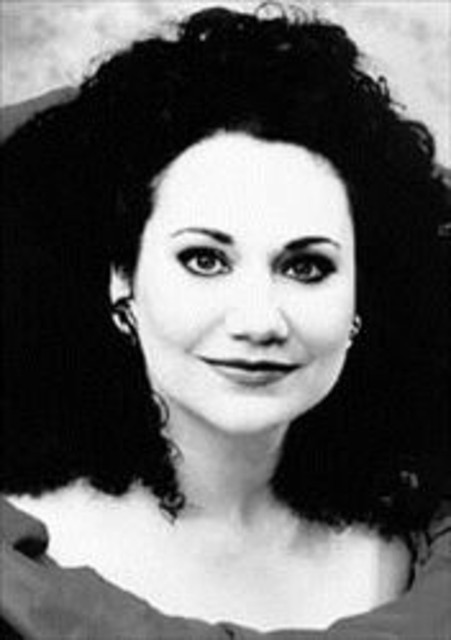
Cheryl Studer
Charts
Tracks
Playlists
Press Mentions
Google Rankings
Overview
Not included in any known risky playlists
Monthly Listeners
Series
- Monthly Listeners
- Listeners from Playlists
- Change
Discography
Top Audiences
Top Listener Locations
 Madrid, ES1,437
 London, GB794
 Berlin, DE588
 Vienna, AT528Barcelona, ES460
Playlist Summary
Playlist Movement
Biography & Metadata
Cheryl Studer's repertoire is among the widest-ranging of those of any soprano, ranging from the Baroque to the twentieth century; her roles include Violetta (La Traviata), Die Kaiserin in Die Frau ohne Schatten, Odabella in Verdi's Attila, the Countess in The Marriage of Figaro, Floyd's Susannah, and nearly all of the lyric Wagner roles: Elizabeth (Tannhäuser), Elsa (Lohengrin), Freia (Das Rheingold), and Sieglinde (Die Walküre). She has also explored the art song repertory extensively; in all these things, she has applied a strong sense of musicianship and period style. Born in Midland, Michigan, Studer took up music at an early age with piano and viola studies. She attended high school at the Interlochen Arts Academy and did her college studies at the Oberlin Conservatory and the University of Tennessee, Knoxville. She first gained recognition during three summers at the Tanglewood festival, where both Leonard Bernstein and Seiji Ozawa expressed admiration for her singing; Ozawa, in fact, engaged her for several BSO concerts during the 1978-79 season. In 1977 she also won the High Fidelity/Musical America award, and in 1978 the Metropolitan Opera Auditions. In 1979 Studer went to Europe to continue her studies, with, among others, Hans Hotter. There she made her opera debut at the Bavarian State Opera in 1980 as the First Lady in Mozart's The Magic Flute. She sang with various other theaters in Germany, including Bayreuth, where she made her debut as Freia in 1985. Her United States debut was in 1984 as Micaela in Carmen at the Lyric Opera of Chicago. In 1987, she returned to Bayreuth to sing Elsa, which brought her to international fame. Her La Scala debut was the next year as Mathilde in Rossini's William Tell, and her Metropolitan Opera debut in 1990 was as Donna Anna in Mozart's Don Giovanni. During the late 1990s, she had a period of vocal problems that led to the Bavarian State Opera canceling her contracts, but after a brief time off the stage, her performances indicated a return to form. The Sawallisch recording of Strauss' Die Frau Ohne Schatten shows her at her best, with a warm, lyrical tone that still has the necessary carrying power for the difficult role of the Empress.
First discovered Oct 13, 2026, 11:46 PM