Ferruccio Tagliavini
Charts
Tracks
Playlists
Press Mentions
Google Rankings
Overview
Not included in any known risky playlists
Monthly Listeners
Series
- Monthly Listeners
- Listeners from Playlists
- Change
Discography
Top Audiences
Top Listener Locations
 Rome, IT116Milan, IT101Bologna, IT57Turin, IT47Naples, IT35
Playlist Summary
Playlist Movement
Event | Playlist | Botted? | Position | Track | Happened at | |
|---|---|---|---|---|---|---|
Biography & Metadata
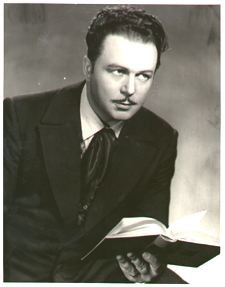
Nearly any time opera lovers discuss inherently beautiful voices, Tagliavini's name is sure to come up. His smooth lyric tenor had a luxurious timbre, reminiscent of Tito Schipa's, and was also warm and extremely expressive. In another resemblance to Schipa, he had a particular gift for vocally caressing a phrase without making it sound like a studied effect, and could sing piano and pianissimo without crooning. He excelled in the lighter, lyric repertoire, and for many was the definitive Nemorino, Nadir (Les Pêcheurs de Perles), Ernesto (Don Pasquale), and Fritz (L'Amico Fritz) of his generation, or for some, even the century. He and composer Pietro Mascagni became close friends, and Mascagni claimed that Tagliavini was instrumental in making L'Amico Fritz a success. During his early years, he focused on this lyric repertoire, but as his career advanced, he added heavier roles, such as Loris Ipanov in Giordano's Fedora, Riccardo in Verdi's Un Ballo in Maschera, and Cavaradossi in Puccini's Tosca. These roles were not as well-suited to his voice, and after taking these on, he showed definite signs of vocal wear. As a young man, he played and sang along with Melba and Caruso recordings, and several local opera lovers, including his father, urged him to consider a musical career. He himself preferred the idea of becoming an engineer and studied for that, and then spent a year overseas in Africa as part of the Fascist army there, and so it was not until he was 24 that he let himself be persuaded to enter the Parma Conservatory. There, he studied with Branucci, and later in Florence with Amadeo Bassi. His opera debut was in Florence as Rodolfo in La bohème in 1938. After World War II, he gathered a wide following among American GIs still based in Italy. His La Scala debut was in 1942, also as Rodolfo, as was his United States debut in Chicago in 1946, and his Met debut in 1957. In addition to his stage performances and recordings, he also appeared in many popular films, mostly of the light and sentimental type. He retired from the stage in 1965, but gave annual performances at Carnegie Hall through 1981. He was married to soprano Pia Tassinari, whom he met in 1940, (they later divorced), and during their marriage they frequently appeared together, as their repertoire was very often complementary. Their recording of L'Amico Fritz, conducted by the composer (Fonit Cetra CDO 18) is a classic.
First discovered Oct 10, 2026, 5:52 PM