Nicolaus Bruhns
Charts
Tracks
Playlists
SEO
Press Mentions
Overview
Not included in any known risky playlists
Monthly Listeners
Discography
Genres
Spotify has not assigned genres to this artist yet
Top Audiences
Top Listener Locations
 Berlin, DE35
 Sydney, AU30Frankfurt am Main, DE23
 Amsterdam, NL22
 Warsaw, PL19
Playlist Summary
Playlist Movement
No activity found
This artist's playlist additions and removals will appear here.
Biography & Metadata
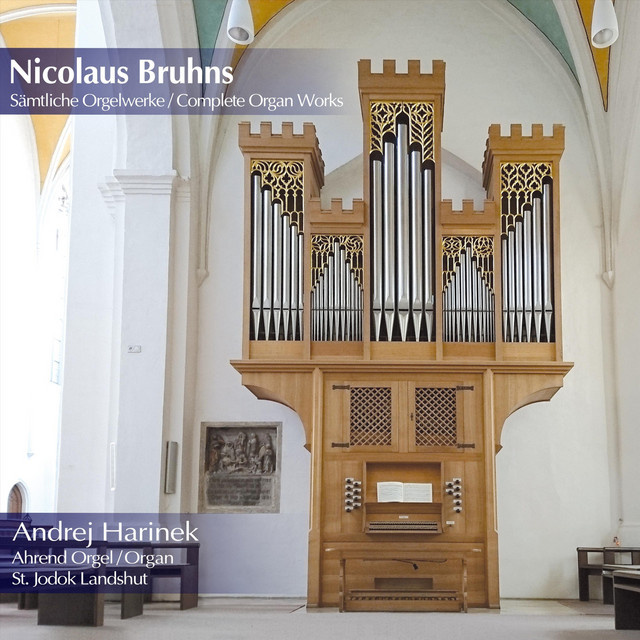
Although he had a short life and wrote very little music that survives, Nicolaus Bruhns is considered important in the development of North German Baroque music for bringing a new virtuosity to his vocal writing. The Bruhns family was among the musical dynasties that one encounters all over the history of German music in the 1600s. The Bruhns lived in northern Germany and southern Denmark. Paul Bruhns (d. 1655) was a lutenist who had three musical sons, of whom the middle, also named Paul, was Nicolaus' father. Paul the Younger got a musical job in Schwabstedt by marrying the daughter of the town organist there and inherited it. (This was a common practice in the area at the time.) When Nicolaus showed uncommon musical talent at an early age, Paul sent him to live with Paul's younger brother, Peter, in Lübeck, a town with a livelier musical life and, hence, better teachers. Primary among them was the great organist Dietrich Buxtehude, who considered Nicolaus his best pupil. Nicolaus also studied violin with his uncle Peter. As a young musician, Nicolaus got work early in his career thanks to Buxtehude's glowing letter of recommendation. He worked for several years at Copenhagen as a virtuoso violinist and composer. This gave Bruhns a chance to get to know Italian musicians, popular with the citizens at the time, and their music, which included a virtuoso element not common in German music at the time. He auditioned for the open post of organist of the Stadtkirche of Husum on March 29, 1689. The city council hired him right away, remarking that "since never before has the city heard his like in composition and performance on all manner of instruments." He was a hit from the start. The city fathers of the larger city of Kiel heard him play and tried to lure him away with more money. Husum, a nice and thriving town, knew what a treasure it had, and, as such, approved a special increase in the salary for his position (taking care to note that it was a special case, for Bruhns alone). Bruhns stayed there until his death in 1697. None of his chamber music has survived, which is especially unfortunate since witnesses make reference to his use of innovative double stops to make it sound like there are more instruments playing than was actually the case. He was known for playing two or three solo lines simultaneously on the violin while playing the bass line on organ pedals. Bruhns' four preludes and fugues are obviously influenced by Buxtehude. After a brilliant opening prelude, the fugues are also inventive in their use of echo effects. His toccatas are technically brilliant and have especially inventive pedal passages. His sacred concertos for chorus have the virtuosity of Italian instrumental concertos.
First discovered Aug 21, 2026, 2:08 PM