William Schuman
Charts
Tracks
Playlists
Press Mentions
Google Rankings
Overview
Not included in any known risky playlists
Monthly Listeners
Series
- Monthly Listeners
- Listeners from Playlists
- Change
Discography
Genres
Spotify has not assigned genres to this artist yet
Top Audiences
Top Listener Locations
 Chicago, US49Dallas, US39New York City, US39Atlanta, US31Los Angeles, US30
Playlist Summary
Playlist Movement
Biography & Metadata
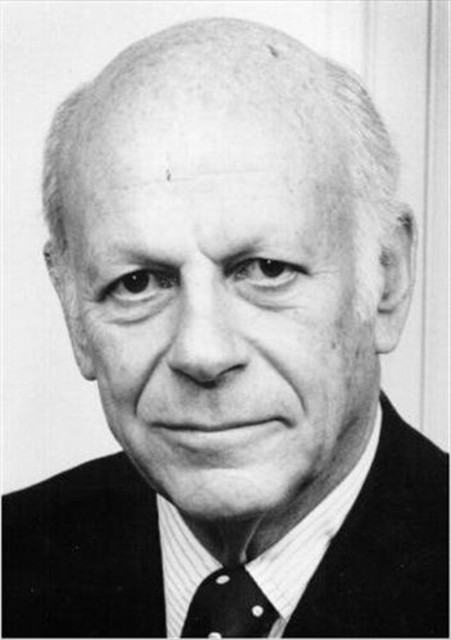
William Schuman's 60-year career as a composer and an educator left an indelible mark on several generations of American musicians. Schuman began exploring jazz and popular music while attending public school, eventually forming an ensemble of his own (in which he played violin and banjo). Abandoning a career in commerce, Schuman enrolled in the Juilliard Summer School, and, in 1933, entered Columbia University's Teacher's College, eventually taking his bachelor's and master's degrees. After summer study at the Salzburg Mozarteum in 1935 and the completion of his First Symphony in 1936 (a work subsequently withdrawn by the composer) he received private instruction from well-known American composer Roy Harris. Schuman found an ally in conductor Serge Koussevitsky, who, at Harris' prompting, premiered the Symphony No. 2 in 1938 (also subsequently withdrawn). Between 1938 and 1945 Schuman served as director of publications for G. Schirmer, Inc. as well as on the faculty of Sarah Lawrence College, leaving this post to take over as president of the Juilliard School (where he remained until 1961, initiating a wide range of new projects and policies, including the complete reorganization of the theory/composition program and the creation of the Juilliard String Quartet). Other administrative positions throughout his long career include serving as president of the Lincoln Center for the Performing Arts (1962-1969), director of the Koussevitsky Music Foundation, director of the Chamber Music Society at Lincoln Center, and director of the Walter W. Naumberg Foundation. Late in life he was awarded the National Medal of the Arts (1987), and was among those premiere American artists honored at the Kennedy Center in 1989. Already an established composer in the early 1940s, Schuman was thrust into the national and international limelight when the very first Pulitzer Prize in music was bestowed upon him in 1943 (for his cantata A Free Song). His Third Symphony, along with Harris' and Copland's Third Symphonies, is considered by many to be the pinnacle of American symphonic achievement, with lofty aesthetic aims and rigorous contrapuntal structure. The Violin Concerto of 1959 (first composed in 1947, but heavily revised during the following decade) is an important American contribution to the genre, although, like most of Schuman's work, it has fallen into disuse.
First discovered Oct 7, 2026, 9:03 PM