William Wolfram
Charts
Tracks
Playlists
Press Mentions
Google Rankings
Overview
Not included in any known risky playlists
Monthly Listeners
Discography
Top Audiences
Top Listener Locations
 Mexico City, MX221
 London, GB178
 New York City, US160
 Santiago, CL135
 São Paulo, BR116
Playlist Summary
Playlist Movement
Event | Playlist | Botted? | Position | Track | Happened at | |
|---|---|---|---|---|---|---|
Biography & Metadata
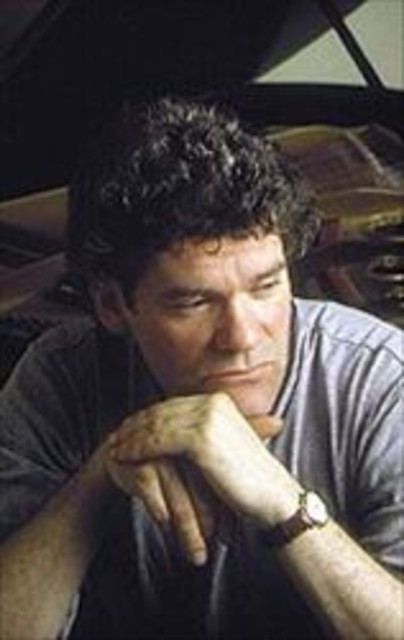
Tall and powerfully built, pianist William Wolfram has a technique to match. While he is able to summon torrents of sound for the grandest moments in the Romantic literature, he is also able to produce the subtlest gradations in volume and inform soft passages with the most persuasive, lambent tone. Well able to match the best-publicized piano virtuosos of the day (and with none of their musical distortions), Wolfram has won ringing reviews for his live performances. Still, a major recording career has eluded him. The re-release of his superb collaboration with violinist Frank Almond on the Brahms' violin sonatas, however, has been extravagantly praised and his participation in the Edward J. Collins recording project is significant. After completing his studies at the Juilliard School of Music, Wolfram attracted attention with his silver medal performances at both the William Kapell and Naumburg competitions. His participation in the 1986 Tchaikovsky Piano Competition was documented and later broadcast on television. Music writer Joseph Horowitz subsequently featured Wolfram in his book Ivory Trade, dedicating an entire chapter to the pianist and comparing him to the young Van Cliburn and Vladimir Horowitz as an exemplar of the Romantic virtuoso tradition. The New York Times commented, "Wolfram's technique is flabbergasting; fiendishly difficult octave passages were as child's play, and his strength is tempered by an easy poetry." Since his competition successes, Wolfram has appeared in recital and symphony performances in many of America's most prominent venues. Following his debut with the Pittsburgh Symphony led by Leonard Slatkin, he has appeared as soloist with orchestras in Dallas, Florida, Fort Worth, Indianapolis, Milwaukee, Minnesota, Omaha, San Diego, San Francisco, Syracuse, and in Washington, D.C., the National Symphony. Beyond the North American continent, Wolfram has appeared with the Budapest Philharmonic, the Krakow Symphony, the Moscow Philharmonic, and the Wroclaw Philharmonic and the symphonies of Capetown and Johannesburg in South Africa, the National Symphony of Peru, and Thailand's Bangkok Philharmonic. In recital, he has performed in numerous halls in France, Holland, Spain, Italy, Switzerland, Canada, and the Philippines. His reliability has given him a reputation for prevailing in crisis occasions. With the Minnesota Orchestra, he performed as a last-minute replacement in Prokofiev's Piano Concerto No. 3, going on-stage without so much as a rehearsal. Another last-minute cancellation found Wolfram performing the Liszt Concerto No. 1 with the Milwaukee Symphony Orchestra in November 1999, winning a rave review in the process. The writer for The Milwaukee Journal Sentinel praised the pianist's "tremendous technical agility" and his "gripping interpretation." In March 2001, Wolfram returned to Milwaukee to perform the Chopin Piano Concerto No. 1 with the M.S.O. in a new orchestration by Paul Chihara commissioned by the orchestra. In the new millennium, Wolfram has become a more frequent visitor to the recording studio with such projects as the first and third piano concertos of American composer Edward J. Collins. Collaborating with conductor Marin Alsop and the Royal Scottish National Orchestra, Wolfram brings to these two large-scaled works the large technique and visionary interpretation to match their scale and textures. Live performances of early versions of Liszt's etudes are preparatory to release on a studio recording of them on the Naxos label. The Brahms sonatas he recorded with violinist Frank Almond have been universally praised on re-release, some reviewers going so far as to deem them the finest yet recorded.
First discovered Oct 8, 2026, 10:15 AM