Fritz Stiedry
Charts
Tracks
Playlists
SEO
Press Mentions
Overview
Not included in any known risky playlists
Monthly Listeners
Discography
Top Audiences
Top Listener Locations
 New York City, US11
 Melbourne, AU7
 Berlin, DE6
 Stockholm, SE5
 Mexico City, MX5
Playlist Summary
Playlist Movement
No activity found
This artist's playlist additions and removals will appear here.
Biography & Metadata
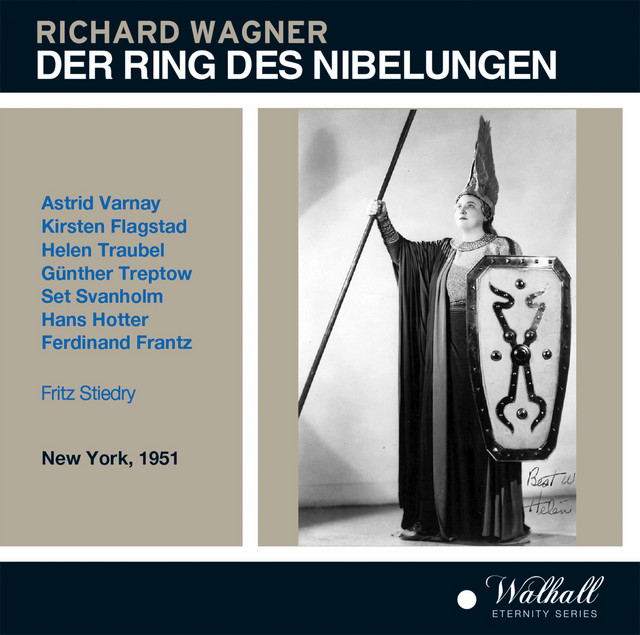
Symphony and opera conductor Fritz Stiedry directed a number of orchestras during a long and honorable career without ever quite entering the topmost rank of musicians. What he did achieve, however, was a high level of competence that served well the needs of several institutions, most notably the Metropolitan Opera where he led performances for more than a decade. While studying at the conservatory in his native city, Stiedry also pursued a degree in law from the University of Vienna, graduating with a doctorate in that field. His musical gifts, however, drew the attention of Gustav Mahler and in 1907 Stiedry was appointed assistant conductor at the Vienna Opera. That same year, and again on Mahler's recommendation, Stiedry was engaged by Dresden as an assistant to Ernest von Schuch. In quick succession came other engagements in Teplitz, Pozman, Prague, Nuremberg, and Cassel. At Cassel's Court Opera, Stiedry was made chief conductor in 1913 and from 1914 to 1923 he was first conductor at the Berlin Opera. After his Berlin engagement, he guest conducted widely, spending one year at the Vienna Volksoper, succeeding Felix Weingartner (1924 - 1925). From 1928 to 1933, Stiedry was at the Berlin Städtische Oper where he was music director, a position previously held by Bruno Walter. In this period, Stiedry served as president of the Berlin division of the International Society for Contemporary Music. During his tenure at the opera, Stiedry worked with stage director Carl Ebert, the two of them undertaking several productions of middle-period Verdi and mounting a new Ring cycle. In 1932, the conductor presided at the world premiere of Kurt Weill's Die Bürgschaft, a tragic opera to a text by Casper Neher, described by the composer as "a return to real music-making." Unfortunately, the Nazi's assumption of control in 1933 made it clear that neither composer nor conductor had a future in Germany and Stiedry left for the Soviet Union. For four years, Stiedry served as general music director of the Leningrad Philharmonic Orchestra. His responsibilities included conducting concerts in Moscow as well, and he led opera performances in both Leningrad and Moscow on a guest basis. In 1937, Stiedry immigrated to the United States, beginning a final, permanent residency. In 1938, Stiedry entered upon a productive period as conductor of the freshly formed New Friends of Music Orchestra in New York. The music of Bach figured prominently in his programming and he led a series of Haydn symphonies, several of them newly edited by musicologist Alfred Einstein and not performed since the composer's lifetime. In 1940, Stiedry turned his attention to Mozart with a cycle of that composer's concertos and symphonies. With the New Friends Orchestra he led the world premiere of Schoenberg's Second Chamber Symphony. During the 1945 - 1946 season, Stiedry conducted the Chicago Opera and in 1947 at Glyndebourne. On November 15, 1946, he made his debut at the Metropolitan Opera directing a performance of Siegfried which also introduced heldentenor Set Svanholm to the theater. Stiedry's conducting won positive reviews for its breadth and liveliness, qualities observed and valued in other performances of Wagner, Mozart, and Verdi over the course of 12 seasons and more than 250 performances. When Rudolf Bing became Metropolitan manager in 1950, Stiedry's role became even more central. He was on the podium for Bing's calling card production of Don Carlo in 1950 and both oversaw and led the celebrated Così fan tutte of 1951.
First discovered Sep 9, 2026, 6:17 AM