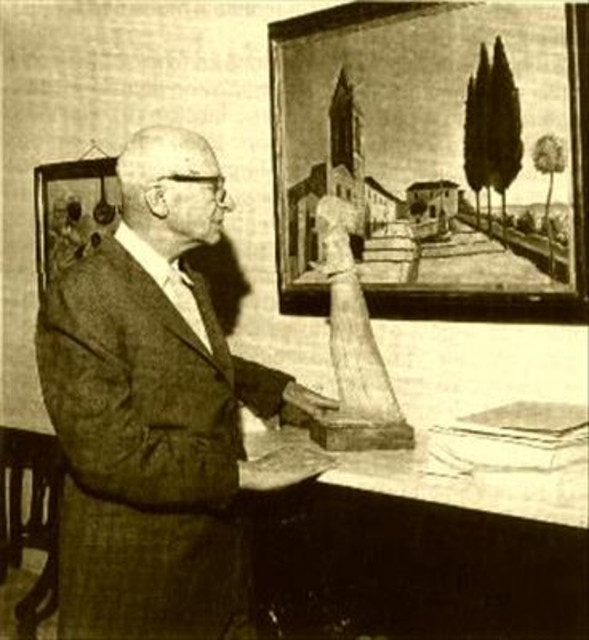
Mario Castelnuovo-Tedesco
Charts
Tracks
Playlists
SEO
Press Mentions
Overview
Not included in any known risky playlists
Monthly Listeners
Discography
Genres
Spotify has not assigned genres to this artist yet
Top Audiences
Top Listener Locations
 Rome, IT651
 São Paulo, BR521
 Mexico City, MX443
 London, GB439Milan, IT377
Playlist Summary
Playlist Movement
No activity found
This artist's playlist additions and removals will appear here.
Biography & Metadata
Mario Castelnuovo-Tedesco was one of the most prolific Italian composers of the first half of the twentieth century. He had established a career as a composer in a number of genres, including chamber music, vocal and choral music, opera, keyboard music, and orchestral music, before fleeing Europe to escape Nazi persecution. His later years in the United Stated were devoted largely to writing film scores. Born in Florence, Castelnuovo-Tedesco studied piano and composition at the Florence Conservatory, taking diplomas in both subjects (piano 1914, composition 1918). While primarily studying with Ildebrando Pizzetti, Castelnuovo-Tedesco also attracted the attention of Italian composer, pianist, and conductor Alfredo Casella, who would become one of the young composer's earliest champions. After successfully supporting himself as a freelance composer, pianist, and essayist during the 1920s and 1930s, Castelnuovo-Tedesco, who was Jewish, left Europe in 1939 to avoid persecution under the Hitler and Mussolini regimes. Toscanini sponsored his relocation to the U.S. The composer settled in California, and while he continued to compose for a variety of media, he spent much of the next decade and a half scoring films for major studios. He was extraordinarily productive during that period, composing music that appeared in over 250 films, although his contributions were not consistently listed in the credits. His scores included And Then There Were None (1945), The Loves of Carmen (1948), and The Day of the Fox (1957). Beginning in 1946, he served on the faculty of the Los Angeles Conservatory of Music. Castelnuovo-Tedesco's style and techniques left a mark on a younger generation of film composers, including his students Henry Mancini, Jerry Goldsmith, and John Williams. In his later years, the composer worked on an autobiography, which he left unfinished at his death in 1968. Castelnuovo-Tedesco's music was influenced by a number of styles, including Impressionism, neo-Classicism, and briefly, serialism, but he was unwilling to align himself categorically with any compositional philosophy or trend. His later work, particularly after his involvement in the film industry, became increasingly neo-Romantic. Perhaps his most lasting contribution is to the literature for the guitar. He had met the virtuoso Andrés Segovia in 1932 and wrote his Guitar Concerto No. 1 for him. He went on to write a second guitar concerto, a concerto for two guitars, and almost 100 other guitar pieces. One of his most popular and frequently performed works remains Platero y yó (1960) for guitar and narrator.
First discovered Aug 25, 2026, 4:10 PM