Modest Mussorgsky
Charts
Tracks
Playlists
Press Mentions
Google Rankings
Overview
Not included in any known risky playlists
Monthly Listeners
Series
- Monthly Listeners
- Listeners from Playlists
- Change
Discography
Genres
Spotify has not assigned genres to this artist yet
Top Audiences
Top Listener Locations
 London, GB8,140
 New York City, US5,317
 Mexico City, MX5,291
 Berlin, DE4,753Chicago, US4,549
Playlist Summary
Playlist Movement
Biography & Metadata
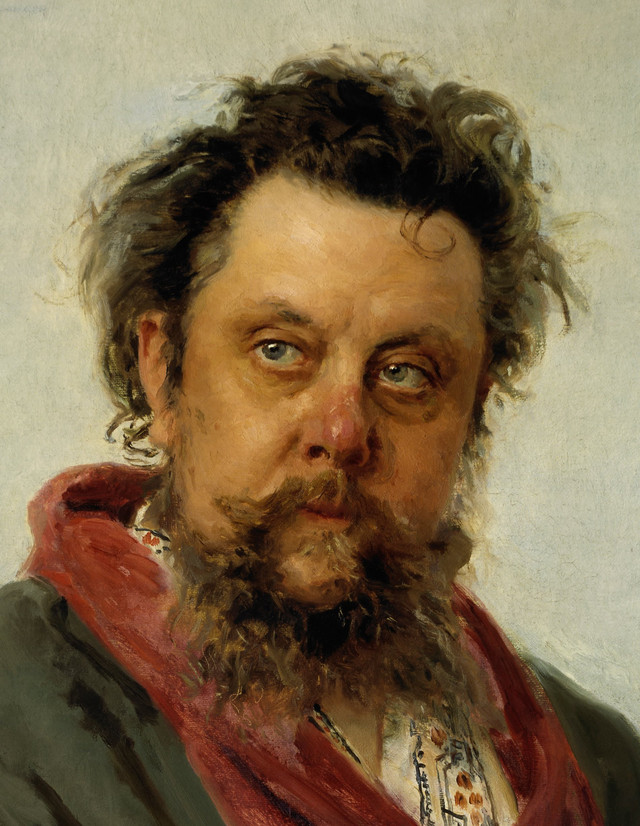
His musical education was erratic, he toiled as a civil servant and wrote music only part-time, influenced few if any of his contemporaries, died early from alcoholism, and left a small body of work. Yet Modest Mussorgsky was a towering figure in nineteenth century Russian music. His works exhibit a daring, raw individuality, a unique sound that well-meaning associates tried to conventionalize and smooth over. He is best known for Night on Bald Mountain (bowdlerized by Rimsky-Korsakov), Pictures at an Exhibition (a difficult piano suite orchestrated by Ravel), and the dark, declamatory opera Boris Godunov (polished by Rimsky-Korsakov) -- bastardized works all, yet each one full of arresting harmonies, disturbing colors, and grim celebrations of Russian nationalism. Mussorgsky died in poverty, but he was born to a wealthy landowning family. Under his mother's tutelage, he developed a facility at the piano, but entered a cadet school in preparation for a military career. He joined a choir and discovered Russian church music, which would profoundly influence his later work. Upon graduation in 1856, Mussorgsky entered the Russian Imperial Guard. That year he started to socialize with the composers Dargomizhsky and Cui, and through them Balakirev, with whom he began composition lessons. During this period he wrote small piano pieces and songs, and after an emotional crisis in 1858 resigned his commission with the intention of composing full-time. He began to go his own way as a composer in 1861, but was preoccupied helping to manage his family's estate. The decline in his family's fortunes led him to accept low-level civil service positions. He joined a commune with other intellectuals and became a proponent of musical Realism, applying the style to his songs. He had difficulty finishing works in larger formats, but his music circulated widely enough that by the late 1860s he was cast with Balakirev, Cui, Rimsky-Korsakov, and Borodin as part of Russia's "Mighty Handful." Mussorgsky toiled many years at his masterpiece, Boris Godunov, which reflected in music the inflections of Russian speech and met with great success in 1874. That year he also produced his innovative piano suite Pictures at an Exhibition. Yet his heavy drinking led to his dismissal from government service in 1880. Friends offered some financial help and Mussorgsky occasionally accompanied singers at the piano, but his finances and mental state quickly deteriorated. He died in 1881, leaving it to posterity to sort through and complete his unfinished works of unruly genius. ~ James Reel, Rovi
First discovered Aug 18, 2026, 5:14 AM