Chuck Willis
Charts
Tracks
Playlists
Press Mentions
Google Rankings
Overview
Not included in any known risky playlists
Monthly Listeners
Series
- Monthly Listeners
- Listeners from Playlists
- Change
Discography
Genres
Spotify has not assigned genres to this artist yet
Top Audiences
Top Listener Locations
 Los Angeles, US486
 London, GB446
 Melbourne, AU442Sydney, AU332
 Madrid, ES321
Playlist Summary
Playlist Movement
Biography & Metadata
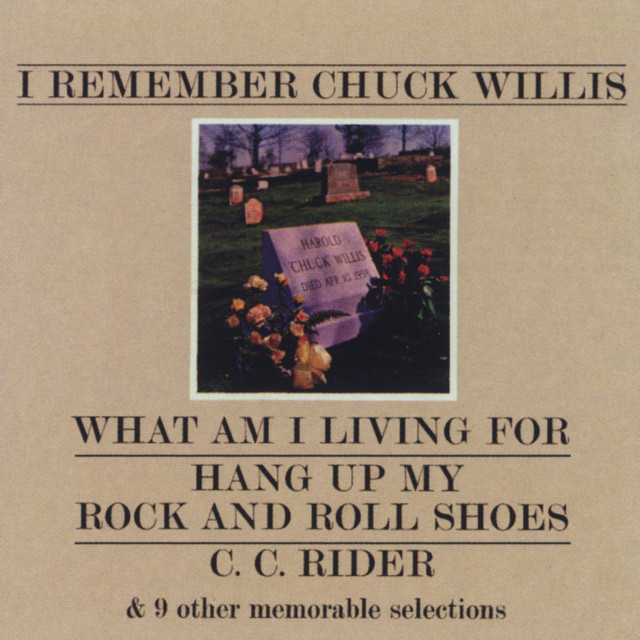
There were two distinct sides to Chuck Willis. In addition to being a convincing blues shouter, the Atlanta-born Willis harbored a vulnerable blues balladeer side. In addition, he was a masterful songwriter who penned some of the most distinctive R&B numbers of the 1950s. He can't be granted principal credit for his 1957 smash adaptation of "C.C. Rider," an irresistible update of a classic folk-blues, but Willis did write such gems as "I Feel So Bad" (later covered by Elvis Presley, Little Milton, and Otis Rush), the anguished ballads "Don't Deceive Me (Please Don't Go)" and "It's Too Late" (the latter attracting covers by Buddy Holly, Charlie Rich, and Otis Redding) and his swan song, "Hang Up My Rock and Roll Shoes." Harold Willis (he adopted Chuck as a stage handle) received his early training singing at YMCA-sponsored "Teenage Canteens" in Atlanta and fronting the combos of local bandleaders Roy Mays and Red McAllister. Powerful DJ Zenas "Daddy" Sears took an interest in the young vocalist's career, hooking him up with Columbia Records in 1951. After a solitary single for the major firm, Willis was shuttled over to its recently reactivated OKeh R&B subsidiary. In 1952, he crashed the national R&B lists for OKeh with a typically plaintive ballad, "My Story," swiftly encoring on the hit parade with a gentle cover of Fats Domino's "Goin' to the River" and his own "Don't Deceive Me" the next year and "You're Still My Baby" and the surging Latin-beat "I Feel So Bad" in 1954. Willis also penned a heart-tugging chart-topper for Ruth Brown that year, "Oh What a Dream." Willis moved over to Atlantic Records in 1956 and immediately enjoyed another round of hits with "It's Too Late" and "Juanita." Atlantic strove mightily to cross Willis over into pop territory, inserting an exotic steel guitar at one session and chirpy choirs on several more. The strategy eventually worked when his 1957 revival of the ancient "C.C. Rider" proved the perfect number to do the "Stroll" to; American Bandstand gave the track a big push, and Willis had his first R&B number one hit as well as a huge pop seller (Gene "Daddy G" Barge's magnificent sax solo likely aided its ascent). Barge returned for Willis's similar follow-up, "Betty and Dupree," which also did well for him. But the turban-wearing crooner's time was growing short -- he had long suffered from ulcers prior to his 1958 death from peritonitis. Much has been made of the ironic title of his last hit, the touching "What Am I Living For," but it was no more a clue to his impending demise than its flip, the joyous "Hang Up My Rock and Roll Shoes." Both tracks became massive hits upon the singer's death, and his posthumous roll continued with "My Life" and a powerful "Keep A-Driving" later that year. ~ Bill Dahl, Rovi
First discovered Aug 22, 2026, 5:36 PM