Los Chichos
Charts
Tracks
Playlists
Press Mentions
Google Rankings
Overview
Not included in any known risky playlists
Monthly Listeners
Series
- Monthly Listeners
- Listeners from Playlists
- Change
Discography
Genres
Spotify has not assigned genres to this artist yet
Top Audiences
Top Listener Locations
 Madrid, ES132,736
 Santiago, CL80,051Barcelona, ES78,270Seville, ES37,705Málaga, ES36,465
Playlist Summary
Playlist Movement
Biography & Metadata
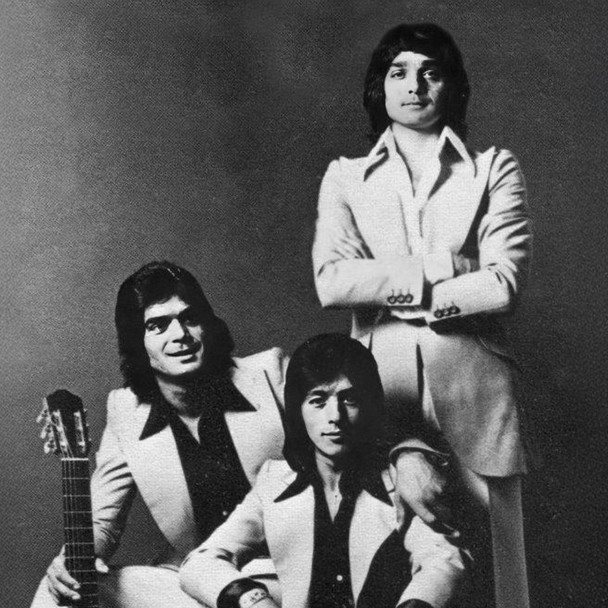
Los Chicos are a popular rhumba band from Spain whose legacy spans several decades and whose success peaked during the early to mid-'80s. The band's musical style evolved over the years, fusing rhumba flamenca with pop/rock to varying degrees, and was often compared to that of Los Chunguitos, a similarly popular rhumba band of the same era. Founded in 1973 in Madrid, Spain, the band was originally a trio comprised of vocalist, Spanish guitarist, and songwriter Juan Antonio Jiménez (aka Jeros; born March 29, 1951, in Valladolid, Spain), plus brothers Emilio González (born December 11, 1947, in Madrid) and Julio González (born March 19, 1952, in Madrid), backing vocalists who would develop into contributing songwriters over the years. After signing a recording contract with Philips, Los Chicos made their full-length album debut in 1974 with Ni Más ni Menos. Throughout the remainder of the decade the band released a new album each year: Esto Sí Que Tiene Guasa (1975), No Sé por Qué (1976), Son Ilusiones (1977), Hoy Igual Que Ayer (1978), and Amor y Ruleta (1979). Their popularity peaked during the early to mid-'80s, when they released the albums Amor de Compra y Venta (1980), Bailarás con Alegría (1981), Ni Tú ni Yo (1982), Déjame Solo (1983), Adelante (1984), and Yo el Vaquilla (1985). Los Chicos subsequently took a year-long break before closing out the decade with Porque Nos Queremos (1987), Ojos Negros (1988), and Esto Es Lo Que Hay (1990), their final few albums to feature Jiménez, who split from the group and embarked on a solo career. Jiménez, who had released the one-off collaborative album Sevillanas (1987) on Philips with a group called Egipto, released the solo albums Tembló, Pero No Calló (1990) and Agua y Veneno (1991) before killing himself on October 22, 1995, at age 44 in Madrid. The popularity of Los Chicos had declined during the late '80s as the band's relationship with Jiménez had become increasingly problematic. After his departure from the band in 1990, Los Chicos regrouped, adding Emilio's son Emilio Gonzalez (aka Júnior) in the place of Jiménez and releasing the albums Sangre Gitana (1991), ¡Amigos, No Pasa Ná! (1994), and Gitano (1996). A five-year break followed before Los Chicos returned once again with the albums Ladrón de Amores (2001) and Cabibi (2002) on Mercury Records. Universal Music subsequently reissued the back catalog of Los Chicos with remastered sound quality in 2005 and released the best-of compilation Hasta Aquí Hemos Llegado in 2008. ~ Jason Birchmeier, Rovi
First discovered Aug 13, 2026, 5:22 AM