Paul Schoenfield
Charts
Tracks
Playlists
Press Mentions
Google Rankings
Overview
Not included in any known risky playlists
Monthly Listeners
Series
- Monthly Listeners
- Listeners from Playlists
- Change
Discography
Top Audiences
Top Listener Locations
 Taipei, TW81
 New York City, US50Los Angeles, US48Chicago, US30Taichung, TW25
Playlist Summary
Playlist Movement
Biography & Metadata
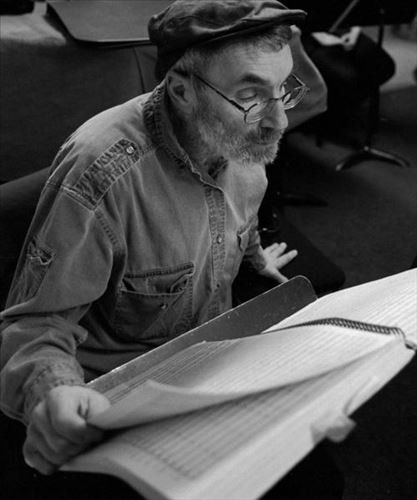
The music of composer Paul Schoenfield reflects folk -- specifically Jewish -- and popular influences. He was also a noted educator. Schoenfield was born in Detroit, Michigan, in 1947. He took up the piano at age six and was writing music of his own within a year. Schoenfield studied both piano and composition during his formative years; among his teachers on the former was Rudolf Serkin, and in the latter field Robert Muczynski. He attended Converse College in South Carolina but transferred to Carnegie Mellon University in Pittsburgh and earned a B.A. degree there. He went on for a doctorate at the University of Arizona. Schoenfield taught music in Toledo, Ohio, for some years, moved to a kibbutz in Israel and taught mathematics there, worked as a freelance composer and pianist in the Twin Cities, Minnesota, area (a regular gig at a steakhouse inspired his later composition Café Music), and returned to Israel, living in the city of Migdal Ha'emek during the 1990s. Later he joined the composition faculty of the University of Michigan, retiring in the 2010s. For the first part of his career, Schoenfield was active as a concert pianist, and in 1987, he made his recording debut, backing violinist Robert Davidovici on the latter's self-titled album. His turn toward composition came later in life, with his Three Country Fiddle pieces for electric violin, percussion, and amplified piano appearing in 1980 as one of his first mature compositions. That was one of many Schoenfield works to show vernacular musical influences. Schoenfield often performed his own works that featured a piano, but they were widely played by other performers as well; he premiered his Four Parables piano concerto with the Toledo Symphony Orchestra in 1983, and that work was recorded in 1994 by the New World Symphony and played in Germany by the Dresden Symphony and recorded again in 2007 by the Prague Philharmonia. Other major Schoenfield works include the opera The Merchant and the Pauper (1999), one of a number of Schoenfield works that draw on Jewish materials. His Camp Songs (2003) brought a finalist nod for the 2003 Pulitzer Prize in Music. Violinist Cho-Liang Lin and pianist Jon Kimura Parker premiered Schoenfield's Sonata for violin and piano at New York's Lincoln Center in 2010. As of the early 2020s, more than 30 of Schoenfield's works had been recorded. ~ James Manheim, Rovi
First discovered Oct 17, 2026, 11:33 AM