Christopher Simpson
Charts
Tracks
Playlists
SEO
Press Mentions
Overview
Not included in any known risky playlists
Monthly Listeners
Discography
Top Audiences
Top Listener Locations
 Madrid, ES45
 London, GB45
 Paris, FR33
 Amsterdam, NL29
 Melbourne, AU25
Playlist Summary
Playlist Movement
No activity found
This artist's playlist additions and removals will appear here.
Biography & Metadata
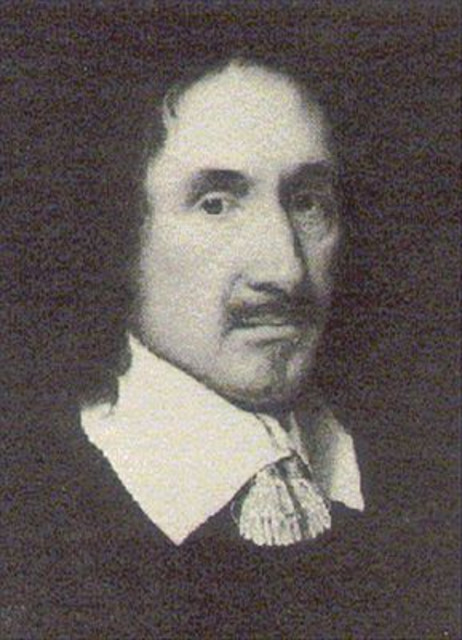
Christopher Simpson was a key figure among English composers of the early Baroque and the most highly regarded theorist of his day. Born between 1602 and 1606 to a catholic family of actors, likely in Egton, Simpson is not heard from again until 1643, when he is found fighting for the Royalists alongside William Cavendish, Duke of Newcastle. After the defeat at the Battle of Marston Moor, the Duke of Newcastle took refuge in France, while Simpson settled in at the home of Sir Robert Bolles in Scampton, Lincolnshire, and became personal tutor on the viol to Bolles' son John. Simpson would live with the Bolles' the rest of his days, even after Robert died and the estate passed to son John. Simpson also earned his keep through teaching others, mainly additional members of the Bolles family. Matthew Locke and John Jenkins were among many musicians who praised Simpson's musical facility and character after he died in 1669, with Jenkins calling him "my very precious friend." Simpson was a viol specialist and a great practitioner of writing in the "division" styled counterpoint for stringed instruments that so influenced Matthew Locke. Simpson's treatises were well known throughout Europe, The Division Violist (1659, 1665) and The Principles of Practical Musick (1665) being the main publications of Simpson to appear in print during his lifetime. Both went into many editions and were still in use in the early part of the eighteenth century. A surprising amount of unpublished manuscript music of Simpson yet survives, and it is from such sources that we know his extraordinary programmatic suites The Monthes and The Seasons, chamber music that nonetheless looks forward to the small-scale orchestral music that would begin to evolve under Locke not long before Simpson died. Unlike most composers of the seventeenth century, neither sacred, nor vocal music is known from Simpson's hand.
First discovered Sep 8, 2026, 11:30 AM