Jr. Walker & The All Stars
Charts
Tracks
Playlists
SEO
Press Mentions
Overview
Included in high risk playlists
Monthly Listeners
Discography
Genres
Spotify has not assigned genres to this artist yet
Top Audiences
Top Listener Locations
 London, GB9,901
 Los Angeles, US9,104Chicago, US5,331New York City, US4,191Philadelphia, US4,082
Playlist Summary
Playlist Movement
No activity found
This artist's playlist additions and removals will appear here.
Biography & Metadata
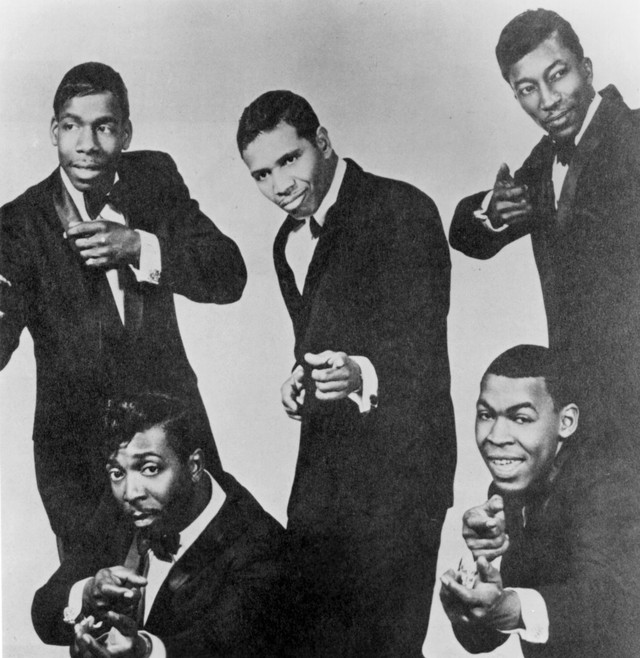
b. Autry DeWalt II, 14 June 1931, Blytheville, Arkansas, USA, d. 23 November 1995, Battle Creek, Michigan, USA. Walker’s record label, Motown Records, stated that he was born in 1942. He was inspired to take up the saxophone by the jump blues and R&B bands he heard in the early 50s. In his mid-teens, he formed his first instrumental group, the Jumping Jacks, adopting the stage name Junior Walker after a childhood nickname. By 1961 he had achieved a prominent local reputation, which reached the ear of label owner and former Moonglow, Harvey Fuqua. He signed Walker to his Harvey label, allowing him free rein to record a series of raw saxophone-led instrumentals. In 1964 Walker followed Fuqua to Motown, where he perfected a blend of raunchy R&B and Detroit soul typified by his 1965 hit, ‘Shotgun’. With its repeated saxophone riffs and call-and-response vocals, it established Walker as the label’s prime exponent of traditional R&B, a reputation that was confirmed by later hits like ‘Shake And Fingerpop’ and ‘Road Runner’. The latter was produced by Holland/Dozier/Holland, who also encouraged Walker to record instrumental versions of hits they had written for other Motown artists. Walker’s style became progressively more lyrical in the late 60s, a development that reached its peak on the 1969 US Top 5 hit, ‘What Does It Take (To Win Your Love)?’ This also marked the pinnacle of his commercial success, as subsequent attempts to repeat the winning formula were met with growing public indifference, and from 1972 onwards the All Stars recorded only sporadically. Hot Shot in 1976, produced by Brian Holland, marked a move towards the burgeoning disco market, which was confirmed on two further albums that year, Walker’s first as a solo artist. In 1979, he was one of several Motown artists to move to Whitfield Records. Finding his career deadlocked, Walker returned to Motown in 1983, issuing Blow The House Down, an exercise in reclaiming lost ground. The novelty single ‘Sex Pot’ rekindled memories of his classic hits, although Walker’s greatest commercial success in the 80s came when he guested with Foreigner and played the magnificent saxophone solo on their hit single ‘Urgent’. He lost a two-year battle with cancer in November 1995.
First discovered Aug 21, 2026, 5:34 PM