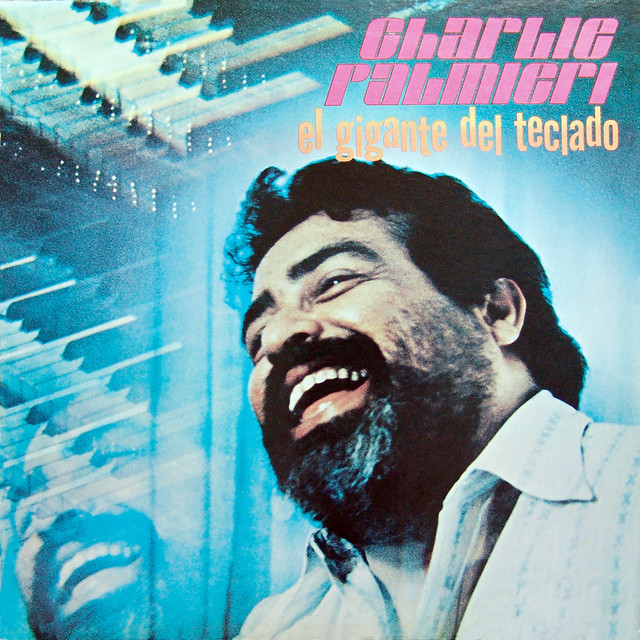
Charlie Palmieri
Charts
Tracks
Playlists
Press Mentions
Google Rankings
Overview
Not included in any known risky playlists
Monthly Listeners
57,382 – 57,877
Discography
Genres
Spotify has not assigned genres to this artist yet
Top Audiences
Top Listener Locations
 Bogotá, CO7,395Cali, CO2,471Medellín, CO2,262
 Mexico City, MX2,192
 Lima, PE1,923
Playlist Summary
Playlist Movement
Event | Playlist | Botted? | Position | Track | Happened at | |
|---|---|---|---|---|---|---|
Biography & Metadata
The older brother of Eddie Palmieri, Charlie Palmieri was every bit as gifted a pianist as his sibling, very percussive and responsive to rhythm while also flashing florid passages that were clearly the product of a classical education. His piano studies began at seven and he attended the Juilliard School of Music, turning pro at 16. He started the group El Conjunto Pin Pin in 1948, and then played in a series of ensembles -- including those of Tito Puente, Tito Rodriguez, and Pupi Campo -- before forming his own Charanga Duboney group in 1958. As music director of the Alegre All Stars while recording for the Alegre label in the 1960s, Palmieri stimulated competition among Latin labels like Tico and Fania, which formed their own all-star bands in response. Like many Latin jazz artists of the time, Palmieri flirted with the popular Latin boogaloo style in the 1960s and made some records for major labels like RCA Victor and Atlantic. He endured a near mental breakdown in 1969, but rebounded to work again for Puente on his El Mambo de Tito Puente television program, and he also found a second career as a historian and teacher of Latin music and history at various New York colleges in the 1970s. Palmieri moved briefly to Puerto Rico from 1980 to 1983, and after suffering a severe heart attack and stroke upon his return to New York, he recovered to lead various Latin combos, including Combo Gigante. One of his last recordings was a galvanizing cameo appearance on Mongo Santamaria's "Mayeya" in 1987 (now on Mongo's Afro Blue: The Picante Collection for Concord Picante), and he appeared in England for the first time in 1988 shortly before his death. Almost all of Palmieri's work is hard to find through domestic channels, but Messidor's A Giant Step is available on CD. ~ Richard S. Ginell, Rovi
First discovered Aug 23, 2026, 8:43 PM