Gene Kelly
Charts
Tracks
Playlists
Press Mentions
Google Rankings
Overview
Included in high risk playlists
Monthly Listeners
Discography
Genres
Spotify has not assigned genres to this artist yet
Top Audiences
Top Listener Locations
 London, GB8,452
 Sydney, AU5,428Melbourne, AU5,310
 Mexico City, MX4,088
 Madrid, ES4,012
Playlist Summary
Playlist Movement
Event | Playlist | Botted? | Position | Track | Happened at | |
|---|---|---|---|---|---|---|
Biography & Metadata
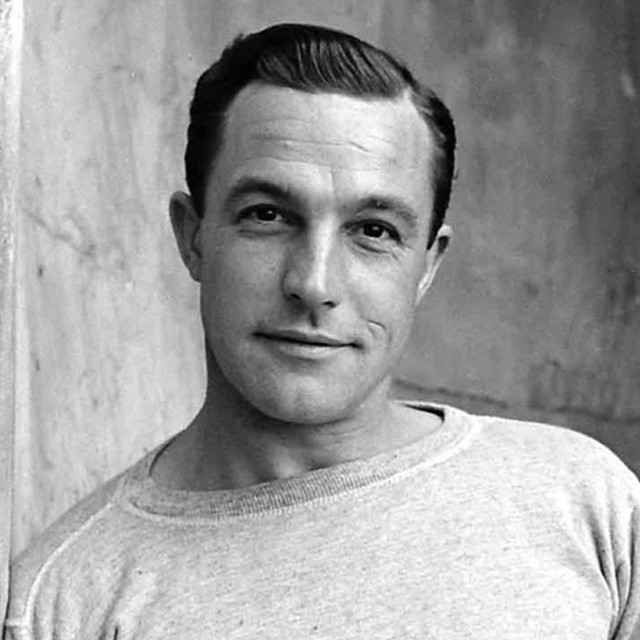
Gene Kelly was never very popular as a singer, even though he did cut records and was seen in movie roles in which he sang -- rather, it was his work onscreen as a dancer, choreographer, and director that allowed him to exert a key influence over the popularity of certain song catalogs in the mid-20th century. Showing an early aptitude in both gymnastics and dance, Eugene Curran Kelly, as he was named at birth, had devoured, by his early teens, everything he could about dance in general and ballet in particular. He was already a successful dance teacher in his hometown of Pittsburgh when he began his ascent in the original Broadway production of Richard Rodgers' and Lorenz Hart's Pal Joey. This led to a film contract with David O. Selznick, which was sold to MGM before Kelly even reported to Hollywood. The allegiance with MGM proved a godsend for both the studio and Kelly, who (with the help of producer Arthur Freed) began a process of energizing the film company's musical output for the next 15 years. The studio had been doing notable musicals almost since the dawn of sound, going back to the original 1929 musical comedy/drama The Broadway Melody, and was gradually moving -- under the guidance of Freed and the people with whom he surrounded himself -- to the next level; by the time Kelly arrived, the "Broadway Melody" series of movies had seen their day, and the rapidly maturing presences of Judy Garland and Mickey Rooney would soon bring a halt to their cycle of youth-oriented musicals built around standardized formulas and the two young stars' seemingly boundless enthusiasm. Kelly was initially cast alongside Garland in For Me and My Gal, a safe, period musical coming out of a vaudeville setting and tradition, and in his next screen appearance, starring in Thousands Cheer (1943), he carried the movie, an adult version of the Garland/Rooney-style "hey kids, let's put on a show" vehicle. But by the mid-'40s, MGM was starting to do somewhat more diverse musicals, which were mounted on an ever-grander scale and used much larger budgets; not all of these were successful, including those in which Kelly worked -- their version of Cole Porter's Du Barry Was a Lady was hopelessly compromised by the studio's dampening down of most of the stage original's more daring elements. But in the midst of all of this activity (which included a loan-out to Columbia Pictures for Cover Girl, a musical that was more ambitious than any of his MGM films to date), Kelly revealed himself to be a quintuple threat: dancer, actor, singer, choreographer, and director. Anchors Aweigh put Kelly alongside a young Frank Sinatra but it also gave him a bravura dance segment involving live action and animation mixed together, all in Technicolor, in which his dancing partner was Jerry the Mouse from the Tom & Jerry cartoons. As Kelly's popularity and box office grosses grew, so did his influence at the studio, and he began proposing more ambitious projects as a director as well as a choreographer and performer. And there were other activities taking place at MGM in the post-World War II era that utilized additional aspects of his talent -- when MGM started its record label in 1948, there was a Gene Kelly album, Song & Dance Man, included among its earliest releases. And he did, in those days in his movies, share some vocals with the likes of a young Frank Sinatra -- and acquitted himself decently -- but it was the dancing and choreography that were the real focus of his work. It was in the big musicals conceived near the end of the '40s -- starting with On the Town, adapted from the hit stage musical by Betty Comden, Adolph Green and Leonard Bernstein -- and his later, more personalized vehicles, An American in Paris and Singin' in the Rain, that gave Kelly his greatest influence over music. By that time, his vocal range had narrowed somewhat from the pleasing light tenor he'd revealed in For Me and My Gal a decade earlier, but his onscreen geniality and overall popularity allowed him to effectively re-popularize many songs by George and Ira Gershwin, and Arthur Freed and Nacio Herb Brown. His most popular and influential work as a singer can also be found on the soundtracks for those films -- although it was the films themselves, and the arrangements and visual set pieces (which Kelly had a lot to do with shaping, even when he didn't have co-directing credit, as on An American in Paris), that did more for the songs than his vocalizing. One can also add to that list the soundtracks to Brigadoon, Summer Stock, and the compilation soundtrack That's Entertainment! The Best of the M-G-M Musicals. Rather ironically, his singing on Brigadoon wasn't all that good -- and dangerously close to ragged at times -- but the soundtrack was around for years and it was through the movie that most people came to know the score after the show's original Broadway run. Alas, Kelly's time in the limelight was relatively brief, not quite 20 years in terms of his actual output. He'd come along on the eve of the studio's ascent to its peak of production in his particular area of expertise (and, in many ways, helped make the achievement of that peak possible); but it was a short time, only a decade, before the arrival of television began reducing movie audiences, and the rise of the teenage filmgoer fundamentally changed the nature of who went to movies, and all production at MGM began getting scaled back. By 1955, the film musical -- especially as it was done at MGM -- was a dying art form commercially, and Kelly turned increasingly toward directing, but those assignments were relatively few and far between, and he allowed his dramatic acting -- which he had never entirely forsaken, but had never built into great prominence before the public either -- to become the focus of his film work in movies such as Marjorie Morningstar and Inherit the Wind. He proved to be as adept at drama as he had been at dance; and in the '70s, spurred on by the growing interest in America's cinematic past that coalesced around MGM's compilation feature That's Entertainment!, Kelly directed the equally fine follow-up, That's Entertainment, Part 2. But for all of his aspirations as a director, his best movie work of the post- MGM era was probably in the Jacques Demy-directed Young Girls of Rochefort; although Demy's focus was song and melody rather than dance, he succeeded in creating a popular new musical idiom for the '60s outside of Hollywood, where Kelly never really had the proper chance to try, and invested himself instead in gargantuan productions such as Hello, Dolly. Instead, as on That's Entertainment, Part 2, he had to content himself with preserving and working within the context of his own past. ~ Bruce Eder, Rovi
First discovered Aug 23, 2026, 5:23 PM