Georges Thill
Charts
Tracks
Playlists
Press Mentions
Google Rankings
Overview
Not included in any known risky playlists
Monthly Listeners
Discography
Genres
Spotify has not assigned genres to this artist yet
Top Audiences
Top Listener Locations
 Paris, FR68Lille, FR28
 Montreal, CA22Lyon, FR17
 Madrid, ES10
Playlist Summary
Playlist Movement
Event | Playlist | Botted? | Position | Track | Happened at | |
|---|---|---|---|---|---|---|
Biography & Metadata
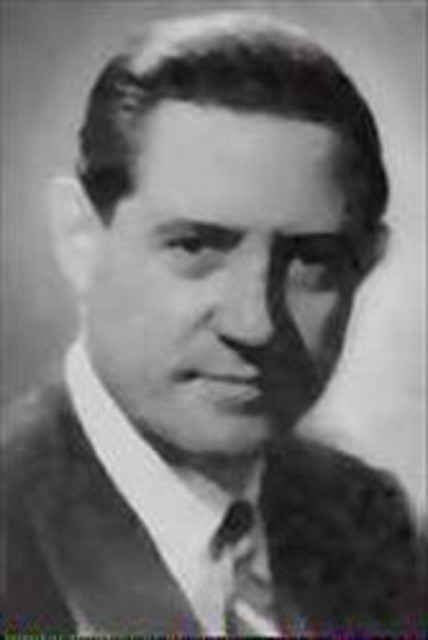
While he performed many of the Italian lyric and spinto roles such as the Duke of Mantua, Radames and Don Carlo, the lighter Wagner roles such as Lohengrin, Parsifal, and Meistersinger, and even Sadko, from the Russian repertoire, and was a fine art song performer, Georges Thill is best known for his roles in French opera. During his long career he was the embodiment of French style, that combination of suavity, textual expression, delicacy, and vocal technique. His voice was not huge, but it had considerable carrying power, and his high notes were clear and ringing. After military service during World War I, he entered the Paris Conservatory in 1919, where he studied with Andre Gresse for two years, after which he went to Naples to study with the famous tenor Fernando de Lucia. He made his operatic debut at the Paris Opera in 1925 as Nicias in Massenet's Thaïs, and thereafter, appeared there every season for the next 15 years, singing the major French tenor roles such as Faust, Werther, Admète in Gluck's Alceste, and Enée in Berlioz's Les Troyens. As his fame spread, he made his Italian debut in 1928 as Calaf in Puccini's Turandot in Verona, his Covent Garden debut as Samson (Saint-Saëns) the same year , and repeated the role of Calaf for his 1929 La Scala and Teatro Colon debuts. His Met debut was in 1931 as Gounod's Romeo. Over the course of his career, he created the title role of Canteloube's Vercingétorix, and also appeared in the world premieres of such now forgotten operas as Gaubert's Naila, Hue's Le Miracle, Lazzari's La Tour de feu (a work whose other claim to fame is that it was the first to use film projection in the stage production), and Rataud's Rolande. He retired from the operatic stage in 1953, his last performance being at the Paris Opera, oddly enough in the role of Canio in Pagliacci, and from the concert stage in 1956. He made three films, best known of which is Gustave Charpentier's Louise, with Grace Moore, and also made numerous recordings. His complete recordings (available on multiple labels) of Massenet's Werther are still a benchmark for all others. Pearl has compiled a CD of songs and arias that shows off the breadth of his artistry in a wide variety of repertoires, and for lovers of French opera, his collection of French arias (EMI) is indispensable.
First discovered Sep 29, 2026, 6:25 AM