Havergal Brian
Charts
Tracks
Playlists
SEO
Press Mentions
Overview
Not included in any known risky playlists
Monthly Listeners
Discography
Genres
Spotify has not assigned genres to this artist yet
Top Audiences
Top Listener Locations
 London, GB29
 Mexico City, MX10
 São Paulo, BR7
 Frankfurt am Main, DE7
 Singapore, SG7
Playlist Summary
Playlist Movement
No activity found
This artist's playlist additions and removals will appear here.
Biography & Metadata
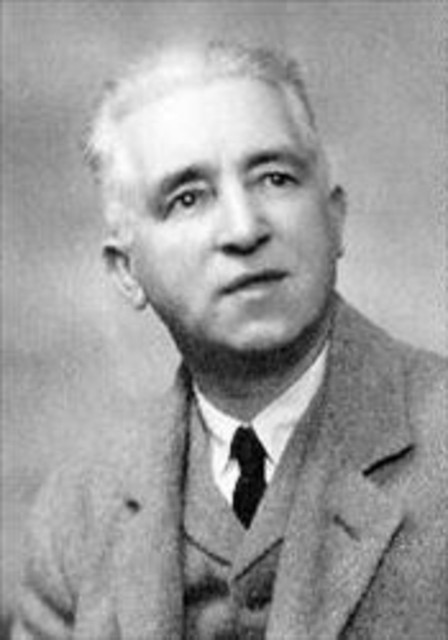
Lauded for his "courage and fortitude in the face of total neglect," over the course of a creative life of 80 years -- one of the longest ever -- Havergal Brian composed big and ambitious works, including 32 symphonies and several operas, most of which went unperformed in his lifetime. Since his death, he has moved from near total obscurity to recognition as one of twentieth century England's most significant composers. Both of Brian's parents sang in a choir, and his earliest musical experiences were of singing and playing organ in the local church. He took some rudimentary music lessons, but was largely self-taught through studying scores and taking part in local amateur performances. After supporting himself for a time as a carpenter's assistant and working for a coal mine and a timber firm, Brian decided to devote himself to music. His first successes as a composer were part-songs and choral works for various British music festivals. Through those experiences he befriended Sir Edward Elgar and Sir Henry Wood; the latter's performance of Brian's English Suite No. 1 (1904) inspired an anonymous patron to help Brian get his music published. In 1912, Brian moved to London. He was very poor, his works weren't being performed, and at one time he contemplated suicide. He did brief service in World War I; after the war, he worked as a freelance music copyist and for many years did writing and editing work for publications like Musical Opinion and Musical World. All the while, he was composing huge pieces of music, such as the comic opera The Tigers (written 1916-1918, orchestrated 1918-1930) and the Gothic Symphony (1919-1927). After completing his four-hour long opera Prometheus Unbound (after Shelley, 1937-1944), Brian stopped composing for a few years. But in 1948, as he put it once, "the muse returned with a rush." He then embarked on the most prolific period of his career: from 1948 to 1968 he completed 27 symphonies, four operas, and various other instrumental works. Twenty-two of those 27 symphonies were written after Brian had turned 80, and seven were written after his 90th birthday. With the completion of his Symphony No. 32 in A flat in October 1968, Brian decided he no longer had any impulse to compose. He died at age 96. Brian was 78 years old before he heard one of his symphonies performed, in a 1954 BBC concert. Performances of his works have remained fairly rare, though the pace picked up with the formation of the Havergal Brian Society. His most notorious work is still his Symphony No. 1, the "Gothic," which for years was listed in the Guinness Book of World Records as the "Largest Symphony." Close to two hours in length, the work calls for a vast orchestra (supplemented by four brass bands and organ), four soloists, two choirs, and children's choir. Completed back in 1927, the symphony only received its first commercial recording in 1990.
First discovered Aug 20, 2026, 10:52 PM