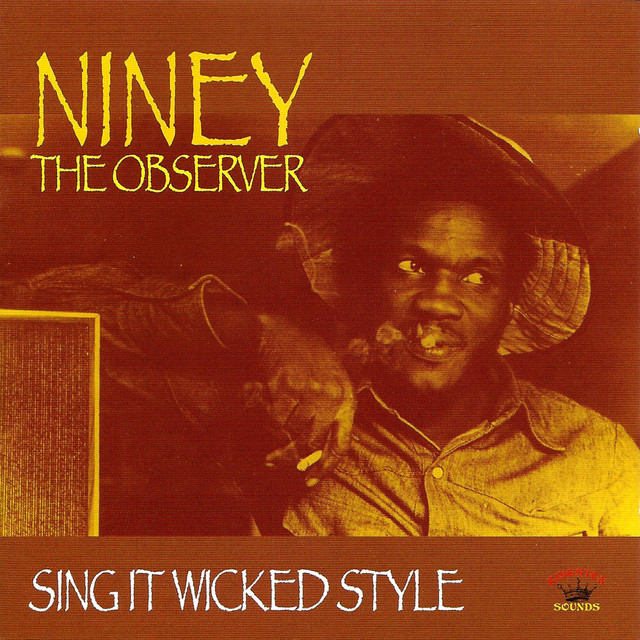
Niney The Observer
Charts
Tracks
Playlists
SEO
Press Mentions
Overview
Not included in any known risky playlists
Monthly Listeners
Discography
Genres
Spotify has not assigned genres to this artist yet
Top Audiences
Top Listener Locations
 London, GB1,610
 São Paulo, BR872
 Los Angeles, US541New York City, US407Brooklyn, US340
Playlist Summary
Playlist Movement
No activity found
This artist's playlist additions and removals will appear here.
Biography & Metadata
Producer Niney the Observer was among the chief architects behind the classic reggae sound of the early 1970s. Born Winston Holness in Montego Bay, Jamaica in 1951, he acquired the Niney moniker when he lost a thumb in a workshop mishap; he entered the music industry during the late '60s as a protégé of producer Bunny Lee, later working with Lee "Scratch" Perry. Upon establishing his own Observer label, Niney's first hit was the 1970 Dennis Alcapone single "Mr. Brown"; later that year he unleashed the seminal "Blood and Fire," which sold some 30,000 copies in Jamaica alone while forever earning the enmity of Bob Marley, to whose "Duppy Conqueror" the record bore more than a passing resemblance. Niney's greatest success came in partnership with singer Dennis Brown, with whom he first teamed in 1973; in the months to follow, their collaboration yielded a series of innovative smashes, among them "Westbound Train," "I Am the Conqueror," "Cassandra," and "No More Will I Roam." He also produced material for figures including Gregory Isaacs, Horace Andy, Junior Delgado, and Delroy Wilson. Niney left the music business during the late '70s, finally resurfacing in Paris around 1982; by the middle of the decade, he had returned to Kingston to briefly work at Channel One studios. He returned to active musical duty in 1988, producing records for Andrew Tosh and Frankie Paul; projects with Little John, Yami Bolo, and Baby Wayne maintained his visibility during the decade to follow. ~ Jason Ankeny, Rovi
First discovered Sep 1, 2026, 12:14 AM