Hans Gál
Charts
Tracks
Playlists
Press Mentions
Google Rankings
Overview
Not included in any known risky playlists
Monthly Listeners
Series
- Monthly Listeners
- Listeners from Playlists
- Change
Discography
Top Audiences
Top Listener Locations
 Berlin, DE16
 Vienna, AT15
 New York City, US11
 Taipei, TW9
 London, GB9
Playlist Summary
Playlist Movement
Biography & Metadata
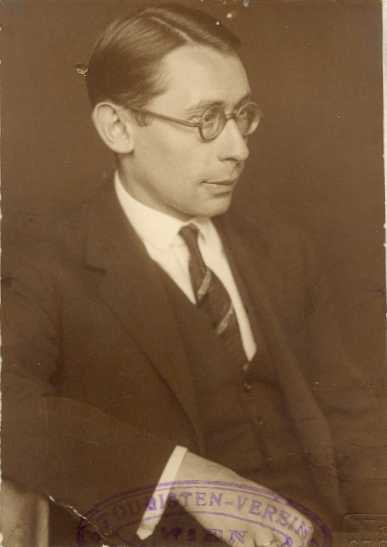
Austrian composer and musicologist Hans Gál managed to rescue a once-brilliant career from the intervention of Nazism that threatened to sideline it for good. An instructor alongside Guido Adler at Vienna University, Gál obtained his doctorate in music in 1913. In 1915, he won an Austrian State Prize for a symphony that was swiftly withdrawn and replaced by another; much of Gál's early music did not survive his harsh criticism of it. After serving with the German Army during World War I, Gál joined the staff of the Vienna Conservatory and enjoyed his first success as a composer with the comic opera Die Heilige Ente (The Sacred Duck, 1923). Throughout the 1920s, Gál's reputation as a composer grew, and he was named director of the Conservatory of Mainz in 1929, a position that instantly ended when the Nazis took control of the city of Mainz in March 1933. Gál and his family moved back to Vienna, but had to flee once again with the onset of the Anschluss, arriving in London in March 1938. Gál was sent to an internment camp for refugees at the Isle of Man in May 1940, but was released later in the year. The Gáls finally settled in Edinburgh, where Gál found work as a lecturer at Edinburgh University and assisted Rudolf Bing in helping found the Edinburgh Festival, in which Gál served as a participant for many years afterward. His music, however, was still mainly performed in Vienna and Mainz after the war, with Gál traveling to facilitate premiere performances. However, Gál gained notice first and foremost in the postwar period as an author, writing authoritative books on Brahms, Wagner, Schubert, Schumann, and Verdi, among others. It wasn't until after his death at age 97 in 1987 that interest in Gál's music began to grow of its own accord through various revivals and recordings.
First discovered Oct 10, 2026, 5:24 AM