Marc Blitzstein
Charts
Tracks
Playlists
SEO
Press Mentions
Overview
Not included in any known risky playlists
Monthly Listeners
Discography
Top Audiences
Top Listener Locations
 New York City, US78
 London, GB57
 Berlin, DE42Brooklyn, US37
 Madrid, ES35
Playlist Summary
Playlist Movement
No activity found
This artist's playlist additions and removals will appear here.
Biography & Metadata
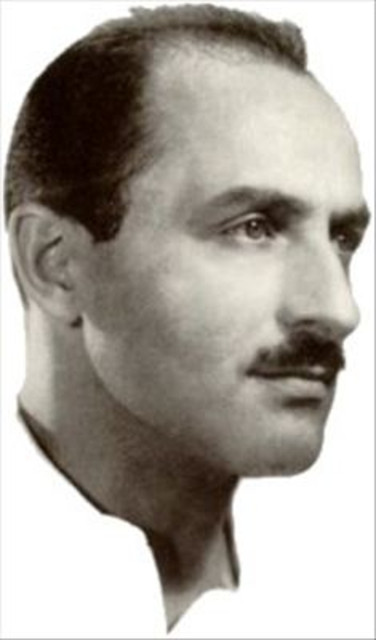
In the first half of the twentieth century, no one successfully fused classical and popular music styles or convincingly fit American vernacular speech to music as well as composer-pianist Marc Blitzstein. Blitzstein composed primarily for the musical stage, using his own librettos, though he also wrote non-dramatic vocal and instrumental music as well. From experimental and polytonal beginnings, Blitzstein's music changed as he rejected the idea of art for art's sake in the 1930s and turned instead to a socially oriented aesthetic that had been embraced by Bertolt Brecht and the rest of the scattered or destroyed German avant-garde. Exposed to music as a young child, he attended the University of Pennsylvania, losing a scholarship after he flunked a physical education class, but persisting with studies in piano and composition. In 1926 he appeared as solo pianist with the Philadelphia Orchestra, soon after which he left for further compositional studies in Europe. He major mentors for the next two years were Nadia Boulanger and Arnold Schoenberg. Afterwards, he made his first two major New York appearances in 1928: as a composer-pianist performing his Sonata for Piano (1927) and as a music critic in the periodical Modern Music. His criticism was better received than his composition, and he returned to Europe in 1929, continuing to compose and write. Blitzstein's first operas were short avant-garde works; they included Triple Sec (1928) and Parabola Circula (1929). However, with The Condemned, a 1932 work on the subject of the Sacco/Vanzetti trial, Blitzstein began to take up the social themes common to most of his later work. In the mid-1930s he attended Hanns Eisler's lectures on the social responsibilities of musicians and took them to heart. The Cradle Will Rock (1936) was the most important of Blitzstein's works of this period, which lasted through 1941. The work was originally intended for the Federal Theatre Project, but it was considered too controversial (the plot dealt with a revolutionary labor uprising), and it ended up as a production of Orson Welles's Mercury Theater (and eventually as subject matter for the Tim Robbins film Cradle Will Rock of 1999). While serving in the U.S. Air Force in London from 1942 to 1945, Blitzstein wholeheartedly supported the war effort with his music. After the war he returned to writing for the stage, though somewhat less militantly than previously. A Koussevitsky Foundation commission led to the opera Regina (1946-1949), originally intended as a Broadway musical and based on Lillian Hellman's The Little Foxes. Stage works of the 1950s included Reuben Reuben (1950-1955) and Juno (1957-1959), based on Sean O'Casey's play Juno and the Paycock, two unsuccessful attempts at Broadway musical theatre. On the other hand, his adaptation of Brecht's Die Dreigroschenoper as The Threepenny Opera was an off-Broadway hit and has become the standard English version. In the 1960s Blitzstein received a Ford Foundation/Metropolitan Opera commission to return to the Sacco and Vanzetti story. Sacco and Vanzetti, and two more one-act operas on stories by Bernard Malamud, were never completed: Blitzstein died after being beaten up by three sailors he met in a bar while on vacation on Martinique.
First discovered Sep 2, 2026, 2:33 AM