Julian Lloyd Webber
Charts
Tracks
Playlists
Press Mentions
Google Rankings
Overview
Not included in any known risky playlists
Monthly Listeners
Discography
Top Audiences
Top Listener Locations
 Mexico City, MX7,062
 London, GB7,010
 Istanbul, TR6,537
 São Paulo, BR5,938
 Sydney, AU4,523
Playlist Summary
Playlist Movement
Event | Playlist | Botted? | Position | Track | Happened at | |
|---|---|---|---|---|---|---|
Biography & Metadata
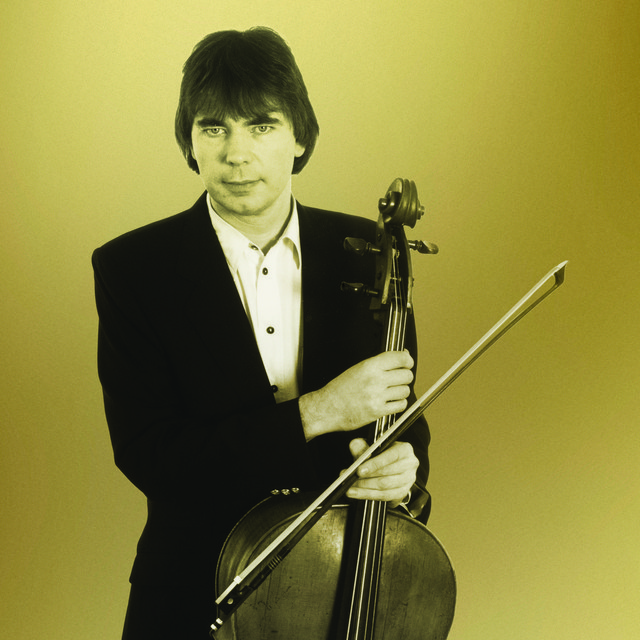
Julian Lloyd Webber is a cellist who is always willing to expand the horizons of the instrument's world. He has been the beneficiary of a number of significant concert works for the instrument, not the least of which is Gavin Bryars' concerto Farewell to Philosophy. One of his early recordings was the Variations for Cello and Rock Band by his brother, Andrew Lloyd Webber. In a career spanning more than 50 years, one that includes teaching as well as performing, he has made dozens of recordings encompassing many of those new works and standard cello repertoire. On the occasion of his 75th birthday, a compilation of some of his favorite recordings was released by Decca. Born in 1951, the son of composer William Lloyd Webber and brother of composer Andrew Lloyd Webber, Julian studied with Douglas Cameron and Joan Dickson, and at the Royal Conservatory of Music in London, and he also spent some time in Geneva with Pierre Fournier. His London debut was in 1971, in a recital, followed in 1972 by his concert debut performing the Cello Concerto of Arthur Bliss. He has made over 50 premiere recordings of works for the cello, many of them written for him. The Guildhall School of Music named him professor of cello in 1978, and he made his American debut in 1980 in New York. He wrote an account of his career in 1984, entitled Travels with My Cello, which happened to be the "Barjansky" Stradivarius, made around 1690. In appearances around the world, he gave premieres of concertos by Rodrigo (Concierto como un Divertimento, 1982), Malcolm Arnold (1989), Gavin Bryars (Farewell to Philosophy, 1995), and Philip Glass (2001, recorded in 2004 with the Royal Liverpool Philharmonic and Gerard Schwarz). He worked with many English orchestras and conductors, such as the London Symphony, Yehudi Menuhin, Sir Neville Marriner and the Academy of St. Martin-in-the-Fields, James Judd and the Philharmonia Orchestra, but also more international artists, such as Maxim Shostakovich and Vaclav Neumann and the Czech Philharmonic. In his more adventuresome collaborations he worked with Elton John, Cleo Laine, and even formed his own ensemble, ¡Bossa Nova! Lloyd Webber's recordings include the collections of shorter pieces and transcriptions Cello Moods, Lullaby, and Cello Song, and a retrospective of his work for Philips/Universal, Made in England, released in 2003. That same year, he formed a consortium with James Galway and Evelyn Glennie to promote music education in the U.K. It led to the founding in 2008 of the In Harmony program -- modeled on Venezuela's El Sistema -- which he has led since its beginning. By 2014, Lloyd Webber's playing was beginning to show limitations from physical health problems, so he retired from public performances and recording, even eventually selling his Strad, but he stepped further into music education. He was principal of the Royal Birmingham Conservatoire from 2015 to 2020, and in 2021 was named an Officer of the Order of the British Empire. Lloyd Webber's 75th birthday heralded several events: the publication of his second book, Bows and Arrows: The Autobiography, a gala concert held at Wigmore Hall, and the completion and recording of a piece he had started to write before his daughter was born. The piece, Jasmine, was included on Take a Bow, the 2026 collection also released in honor of his birthday. ~ Patsy Morita, Rovi
First discovered Aug 19, 2026, 7:24 PM