Los Indios Tabajaras
Charts
Tracks
Playlists
Press Mentions
Google Rankings
Overview
Included in high risk playlists
Monthly Listeners
Series
- Monthly Listeners
- Listeners from Playlists
- Change
Discography
Genres
Spotify has not assigned genres to this artist yet
Top Audiences
Top Listener Locations
 Mexico City, MX8,770
 Santiago, CL2,714
 Bogotá, CO2,441Guadalajara, MX2,104Puebla City, MX2,014
Playlist Summary
Playlist Movement
Event | Playlist | Botted? | Position | Track | Happened at | |
|---|---|---|---|---|---|---|
Biography & Metadata
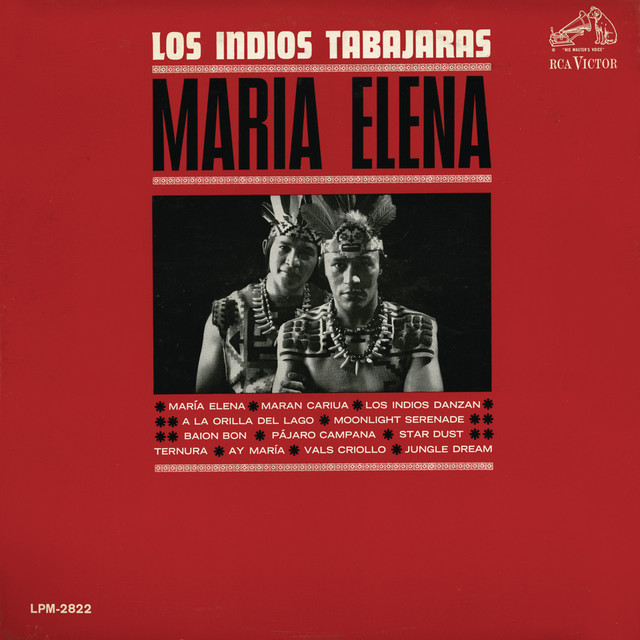
Certainly the most uncommon duo of Brazilian artists to have a solid international career, Los Índios Tabajaras was formed by the brothers Antenor Moreyra Lima (Muçaperê) and Natalício Moreyra Lima (Erundi). In the U.S. they had success in the early '70s with "Sakura-Sakura," and their biggest hit was the fox trot "Maria Elena," which won second place at the American charts and sold over one-and-a-half million copies. Their 48 LPs also sold millions of copies worldwide, and they toured South, Central, and North America, Asia, and Europe before settling in the U.S. Their eclectic act gathered Rimsky-Korsakoff, Chopin, De Falla, and Villa-Lobos with folk tunes and originals, performed in tuxedo and also half-naked with Indian ornaments. In the '60s, they also performed successfully at the San Remo Festival (Italy). Both self-taught musicians, they took their first contact with the violão (guitar) during their journey through the hinterlands of Cariri, Ceará, but had to give it away for a pound of beans. Having both studied music later, Muçaperê was accompanied in the recording of his "Their Very Special Touch" by a full symphonic orchestra and vocal choir. Indians from the Tabajara tribe, they left Ceará with their people in 1933, traveling on foot the almost 2,000 km to Rio de Janeiro. During the three years spent on the journey, they collected a number of regional musics. In Rio de Janeiro they were registered and baptized by the lieutenant Hildebrando Moreira Lima, from whom they took their Christian names. Their first public performance was in 1945, at the Rádio Cruzeiro do Sul (Rio de Janeiro), when they were introduced as Índios Tabajaras, having been hired by the outing. In 1953, they recorded an album through Continental with the baião "Tambor Índio" and the galope "Acara Cary" (both by Muçaperê). In the next year they had success with the polka "Pajaro Campaña" (public domain). After recording several other albums, they left in 1957 for a tour through Argentina, Venezuela, and Mexico. Having both studied music in the latter, Erundi wrote several classic pieces for guitar during that period . Moving on to the U.S., they performed for three years in that country, and returned to Brazil in 1960. They continued to move around, but ended up back in Brazil in 1968, where they recorded an album of Hawaiian songs; they moved to the U.S. soon afterwards. ~ Alvaro Neder, Rovi
First discovered Aug 23, 2026, 3:53 AM