Robert Heger
Charts
Tracks
Playlists
Press Mentions
Google Rankings
Overview
Not included in any known risky playlists
Monthly Listeners
Discography
Top Audiences
Top Listener Locations
 Berlin, DE155Munich, DE134Frankfurt am Main, DE107
 Vienna, AT104Stuttgart, DE86
Playlist Summary
Playlist Movement
Event | Playlist | Botted? | Position | Track | Happened at | |
|---|---|---|---|---|---|---|
Biography & Metadata
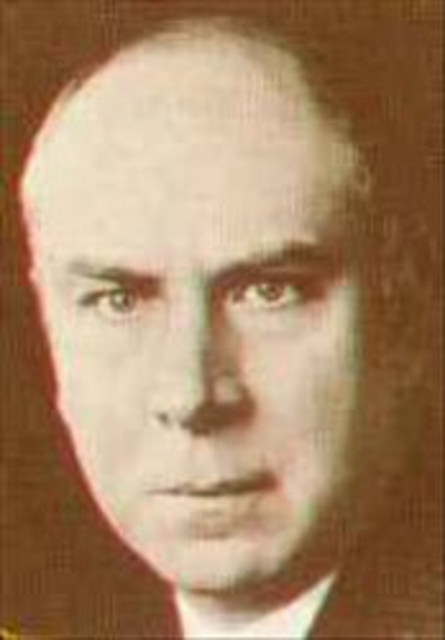
Remembered today more as a conductor than a composer, Robert Heger left a legacy of five operas and a substantial output of choral, orchestral, and chamber works that together divulge a masterly, if somewhat elusive post-Romantic voice. As a conductor, Heger was better known for his work in opera and made several famous opera recordings, including an abridged one of Der Rosenkavalier. Heger was born in Strasbourg, France, on August 19, 1886. He began serious music study when he was 14 with composer/harpist Franz Stockhausen, from whom he took lessons locally for two years. In Zurich Heger was a pupil of conductor/composer Lothar Kempter from 1902-1905, and in Munich he studied with composer Max von Schillings in 1907-1908. Heger's Op. 14 Piano Trio (1908), probably his first important instrumental work, dates to his period of study with Schillings. Several earlier choral works (Opp. 6 & 13) had already demonstrated the composer possessed a fine grasp of vocal music. After his study with Schillings, Heger launched his conducting career in Strasbourg, and following brief conducting stints in Germany -- Ulm and Barmen, from 1908-1911 -- he landed his first important post, at the Vienna Volksoper, in 1911. Two years later he began conducting opera in Nuremberg. It was during his Nuremberg period that he composed and premiered his first opera, Ein fest auf Haderslev (1919; rev. 1943). It was not a success, though the following year he tasted success in his new conducting post, this one at the Munich Opera, where he would stay until 1925. During his Munich years he produced one of his more important choral works, Ein Friedenslied (1924), for soloists and orchestra. From 1925-1933, he conducted at the Vienna State Opera. During this period he wrote two of his finest works, the opera Der Bettler Namenlos (1932) and Variationen über ein Thema aus Verdis Maskenball (1933), for orchestra. In 1933 Heger was appointed conductor at the Berlin State Opera. Here he remained through the turbulent war years, garnering several important commissions from the arts administrators, two of which resulted in the operas Der verlorene Sohn and Lady Hamilton. Heger left Berlin in 1950 to spend the remainder of his career at the Munich State Opera, where his successful 1967 revival of Der Bettler Namenlos helped give the work much deserved exposure. Heger died in Munich on January 14, 1978.
First discovered Oct 13, 2026, 8:29 PM