Greg Osby
Charts
Tracks
Playlists
Press Mentions
Google Rankings
Overview
Not included in any known risky playlists
Monthly Listeners
Series
- Monthly Listeners
- Listeners from Playlists
- Change
Discography
Genres
Spotify has not assigned genres to this artist yet
Top Audiences
Top Listener Locations
 Lagos, NG156Port Harcourt, NG139Abuja, NG76
 Mexico City, MX45
 San José, CR44
Playlist Summary
Playlist Movement
Event | Playlist | Botted? | Position | Track | Happened at | |
|---|---|---|---|---|---|---|
Biography & Metadata
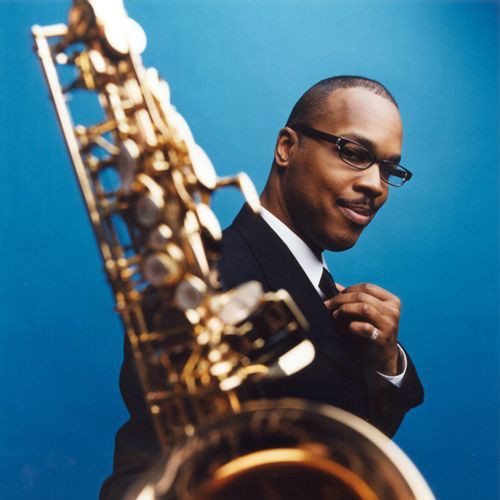
Post-bop saxophonist Greg Osby was born April 3, 1960 in St. Louis, playing in a series of R&B, funk, and blues units throughout his teen years before attending Howard University. Upon graduating from the Berklee School of Music, he settled in New York City and went on to play behind Jack DeJohnette, Andrew Hill, Herbie Hancock, and Muhal Richard Abrams; during the mid-'80s, Osby also served alongside Steve Coleman, Geri Allen, Gary Thomas, and Cassandra Wilson as a member of the renowned M-Base Collective. Making his solo debut with 1987's Sound Theatre, Osby went on to record several sets for the JMT label, also earning notice for his impressive contributions to Hill's 1989 date, Eternal Spirit, and its follow-up But Not Farewell; with 1990's Man-Talk for Moderns, Vol. X, he cut his first headling session for Blue Note, with subsequent efforts for the company (including 1993's 3-D Lifestyles and 1995's Black Book), pioneering a distinctive fusion of jazz and hip-hop. While 1996's Art Forum captured the saxophonist in an acoustic setting, Osby continues exploring new avenues with each successive release, capturing the improvisational intensity of his live dates with 1999's Banned in New York and reuniting with Hill and fellow elder statesman Jim Hill for the following year's The Invisible Hand. 2001's Symbols of Light (A Solution) was a varied effort that witnessed him teaming with a string quartet, while the next year's Inner Circle was an older recording of sessions that featured a knockout version of Bjork's "All Neon Like." Osby teamed with pianist Marc Copland for 2003's Round and Round, while St. Louis Shoes was released that same year on Blue Note. Also released on Blue Note was 2005's Channel Three, which saw Osby working with drummer Jeff "Tain" Watts and bassist Matt Brewer. In 2008, Osby released 9 Levels, his first recording on his own Inner Circle Music label. ~ Jason Ankeny, Rovi
First discovered Aug 25, 2026, 3:29 AM