Max Lorenz
Charts
Tracks
Playlists
Press Mentions
Google Rankings
Overview
Not included in any known risky playlists
Monthly Listeners
Series
- Monthly Listeners
- Listeners from Playlists
- Change
Discography
Genres
Spotify has not assigned genres to this artist yet
Top Audiences
Top Listener Locations
 Berlin, DE13Munich, DE11
 London, GB11
 Vienna, AT9
 New York City, US7
Playlist Summary
Playlist Movement
Event | Playlist | Botted? | Position | Track | Happened at | |
|---|---|---|---|---|---|---|
Biography & Metadata
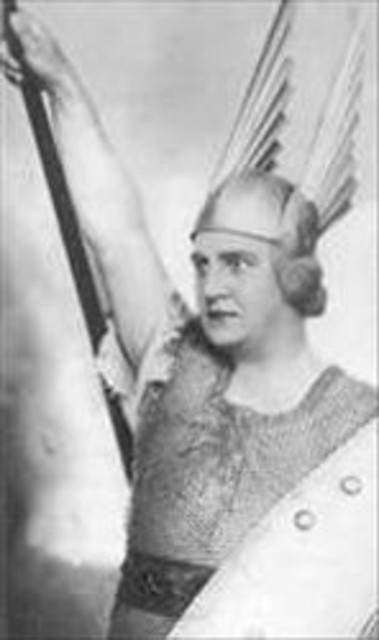
Dramatic tenor Max Lorenz usually made the most of a hard-edged and often intractable voice in singing the heroic roles of Wagner and the high-lying lyric/dramatic ones of Strauss. A riveting stage figure (trim and athletic in appearance), he was, in his prime, perhaps the most credible visual exponent of Siegmund and the two Siegfrieds. His musicianship, likewise, was more reliable than that of most other singers of the big German roles. Yet his voice was so unmalleable and his technique so unorthodox, that his performances required of the listener a considerable period of adjustment. Once the accommodation was made to a vocal mechanism that sounded as though its soft palate had been constructed of concrete, significant rewards awaited. Following study in Berlin, Lorenz was awarded a prize in a competition sponsored by a city newspaper. He was subsequently engaged by Fritz Busch for Dresden and made his debut there in 1927, singing the secondary role of Walter in Tannhäuser. His performance as Menelaus in Strauss' Ägyptische Helena, premiered in Dresden in 1928, prompted the composer to recommend Lorenz to Berlin where they were seeking a tenor for the same role. Lorenz left Dresden, joining the Berlin Staatsoper in 1933. Meanwhile, he had made his debut at the Metropolitan Opera in 1931. His Walter in Die Meistersinger was received as the work of a "serious artist and an intelligent musician," though one afflicted with a "hard and unyielding tone quality" that changed little during the ensuing two decades of Metropolitan appearances. He was found a "credible" Siegmund and a positive Siegfried, albeit with the tonal liabilities cited at his debut. A Lohengrin opposite Maria Jeritza was described as disagreeable in sound and unimpressive in appearance, the judgment on Lorenz's physical presence being at odds with contemporary accounts elsewhere. Reviews of Lorenz's postwar Metropolitan performance brought such expressions as "strained" and "dry voiced," although his Herodes in Salome was hailed as a brilliant realization. Perhaps the continued presence of Lauritz Melchior made it impossible for New York audiences to adjust to the much less beautiful sound produced by Lorenz. London heard Lorenz for the first time on-stage in 1934 when his Walter made a good impression. He returned to Covent Garden in 1937 for the title role in Siegfried and was found too lightweight for the arduous role, but an "eminently cultivated and musicianly singer" nonetheless. Bayreuth proved a more hospitable venue for Lorenz's unique art. For a decade beginning in 1933, the tenor sang Siegfried and Tristan to considerable acclaim and gained a reputation as a singing actor of exceptional ability. Recordings from the theater preserve his Siegfried, sung with rare intensity and rhythmic spring. From 1937, he was a regular at the Vienna Staatsoper, as well as a frequent visitor to other European houses. In the post-WWII era, he sang in Italy, performing both Wagner and Verdi, and appeared in both Mexico City and Buenos Aires. Salzburg heard him frequently, as did other festivals such as those at Amsterdam, Florence, and Zürich. In addition to his dramatic leading roles, Lorenz took on contemporary parts in the premieres of Gottfried Von Einem's Der Prozess in 1953, Rolf Liebermann's Penelope in 1954, and as late as 1961, of Rudolf Wagner-Régeny's Das Bergwerk zu Falun.
First discovered Aug 22, 2026, 10:44 PM