Miya Masaoka
Charts
Tracks
Playlists
Press Mentions
Google Rankings
Overview
Not included in any known risky playlists
Monthly Listeners
Discography
Genres
Spotify has not assigned genres to this artist yet
Top Audiences
Top Listener Locations
 London, GB9
 Madrid, ES7
 Paris, FR5
 Los Angeles, US5Brooklyn, US5
Playlist Summary
Playlist Movement
Event | Playlist | Botted? | Position | Track | Happened at | |
|---|---|---|---|---|---|---|
Biography & Metadata
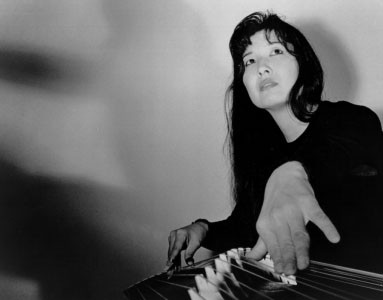
Along with only a handful of other musicians, Miya Masaoka succeeded in introducing the koto to the world of avant-garde music. Based on the West Coast in the early '90s, she first got noticed for her collaborations with Pharoah Sanders, Wadada Leo Smith, and Henry Kaiser, and for highly original mixed media installations and site-specific performances. By the late '90s, she had turned mostly to free improvisation, expanding the possibilities of her instrument with an electronic interface. Her most high-profile activity was her participation in Fred Frith's trio project Maybe Monday. A string instrument with a history arching back to the 11th century, the koto is the instrument most closely associated with Japanese tradition. Masaoka, a Japanese American born in Washington, D.C., got her first contact with it through a cousin residing in Japan. During the 1980s, she studied various schools of Japanese koto music on the U.S. West Coast. All the while, she obtained a B.A. in music from San Francisco State University in 1990 and a master's degree in music composition from Mills College four years later, studying with Alvin Curran. Therefore, her background blended traditional music and contemporary classical composition. Getting involved more deeply into the music scene after 1994, she began by staging special projects. Bee Project #1 (May 1996) included the use of an on-stage beehive, the buzzing sounds of bees being mixed in real time with the music from the performance. What Is the Difference Between Stripping & Playing the Violin?, a reflection on the perception of sex-related professions called for a rock/classical combo, two exotic dancers, and a tape part made of comments on the subject from various people. It was performed on a street corner in San Francisco in March 1997 and attracted much media attention (the performance was later issued on CD by Disques Victo). Soon, everyone looking for an exotic touch to add to their ensemble started to call Masaoka. She appeared on records and on-stage with Steve Coleman, George Lewis, Ben Goldberg, and others, all the while releasing her own albums. The 1996 solo CD Compositions/Improvisations and her 1997 trio session Monk's Japanese Folk Song (with Reggie Workman and Andrew Cyrille) established her as a major improviser. She appeared as a solo artist and in various small improv group contexts in many festivals in Europe and North America, including the Festival International de Musique Actuelle de Victoriaville. Since 1997, she has appeared alongside Fred Frith and Larry Ochs in the trio Maybe Monday. ~ François Couture, Rovi
First discovered Aug 22, 2026, 6:42 PM