Albert Lortzing
Charts
Tracks
Playlists
Press Mentions
Google Rankings
Overview
Not included in any known risky playlists
Monthly Listeners
Series
- Monthly Listeners
- Listeners from Playlists
- Change
Discography
Genres
Spotify has not assigned genres to this artist yet
Top Audiences
Top Listener Locations
 Berlin, DE392Munich, DE275
 Mexico City, MX233
 Santiago, CL227Hamburg, DE210
Playlist Summary
Playlist Movement
Event | Playlist | Botted? | Position | Track | Happened at | |
|---|---|---|---|---|---|---|
Biography & Metadata
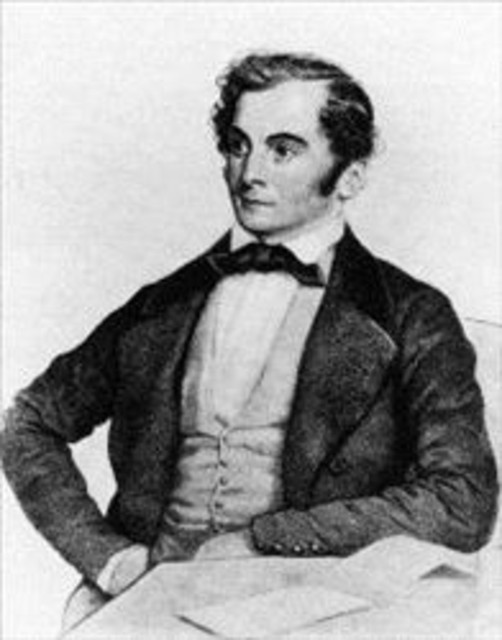
Albert Lortzing is remembered chiefly for his 1837 opera Zar und Zimmermann, but he also wrote other works of artistic merit, including the operas Undine (1845) and Rolands Knappen (1849). His greatest strength lay in the realm of comic opera, where he developed a style that fused elements from the French opéra-comique genre with those of the German singspiel. When he ventured into more serious subject matter, as in his opera, Regina (1848), he often lost his way. Lortzing also wrote a small number of orchestral and choral works. Lortzing was born on October 23, 1801, in Berlin. His parents were amateur actors, thus drawing their precocious only child (a sister died in infancy) to the stage. Young Albert's first love, however, was music, and he showed remarkable talent for it in his early childhood. He would begin composing small pieces and eventually take piano lessons from J. H. Greibel. He also took instruction in theory from Rungenhagen. Lortzing's father sold the family tannery business in 1812 to take up acting professionally with his wife, while young Albert continued studying composition (largely on his own), as well as violin and cello. He also began taking children's parts on the stage. Over the next several years, the family moved to a number of locales: Bamberg (1813), Strasbourg (1814), Bonn (1817), and elsewhere. Lortzing had already written several ambitious scores by 1817, including music for the Kotzebue play Der Schutzgeist. In 1820, he wrote the Andante maestoso con variazioni, for horn and orchestra. Other significant compositions followed, and the composer also began courting an actress, Rosina Regina Ahles, whom he married on January 30, 1823. Lortzing continued his acting, singing, and composing careers, appearing in plays, often with his wife and parents, and turning out works like the 1829 Die Himmelfahrt Jesu Christi. A string of singspiels from 1832, including Der Pole und sein Kind and Szenen aus Mozarts Leben, all use music from other sources. Lortzing wrote his first comic opera, Die Beiden Schützen in 1835, staged two years later with great success in Berlin and other German cities. His greatest success came next, however, with the aforementioned Zar und Zimmermann; it was performed the same year, but achieved widespread success beginning in 1839. Other notable operas followed, too -- Der Wildschütz (1842), for example -- while Lortzing continued singing and acting. By now he was a dissatisfied producer, covetous of a conducting post. In 1844, he got his wish, becoming kapellmeister at the Leipzig Stadttheater. But he did not perform well in the post and was dismissed in 1846. Immensely popular from his operas, however, he quickly received the appointment as kapellmeister at the Theater an der Wien, where his new opera Der Waffenschmied was premiered in May that year. But, as in Leipzig, Lortzing began experiencing setbacks: he was unable to get Regina performed (and never did in his lifetime), and was dismissed in September of that year. Lortzing took up his last directorship in April, 1850, at the Friedrich-Wilhelmstadt Theater in Berlin. His last opera was premiered in Frankfurt am Main in January 1851; he died the following day from a stroke, leaving his wife and 11 children in financial difficulty.
First discovered Nov 4, 2026, 2:06 AM