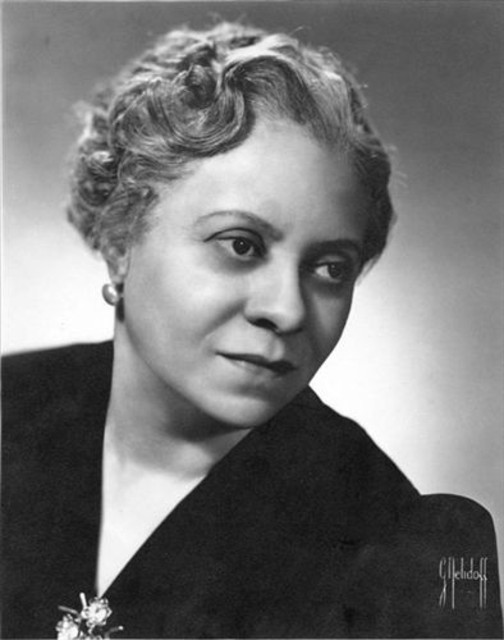
Florence Beatrice Price
Charts
Tracks
Playlists
Press Mentions
Google Rankings
Overview
Included in high risk playlists
Monthly Listeners
Discography
Genres
Spotify has not assigned genres to this artist yet
Top Audiences
Top Listener Locations
 London, GB4,723
 Mexico City, MX3,825
 New York City, US2,976
 Madrid, ES2,589Los Angeles, US2,278
Playlist Summary
Playlist Movement
Event | Playlist | Botted? | Position | Track | Happened at | |
|---|---|---|---|---|---|---|
Biography & Metadata
The first African-American woman whose music was played by a major symphony orchestra, Florence Price was a pioneering figure in 20th century American music. In the 21st century, her music has been performed increasingly often, especially since a large cache of her compositions was rediscovered in 2009. Price was born Florence Beatrice Smith in Little Rock, Arkansas, on April 9, 1887. Her father was a dentist, and her mother was a music teacher. She and her two siblings all took music lessons, and she emerged as the prodigy of the group, giving her first performance at age four. Price and African American composer William Grant Still attended the same elementary school. By the time she graduated as valedictorian of her segregated Catholic high school class, she had already published her first compositions. She attended the New England Conservatory of Music in Boston, studying piano and organ with the plan of becoming a music teacher. She also took composition lessons from George Whitefield Chadwick, who believed with Dvořák that the music of African Americans could form the basis of an American national school of composition; he encouraged her. Graduating in 1906, she returned to Arkansas, teaching for several years and then moving to Atlanta to head the music department at historically Black Clark Atlanta University. There, she married lawyer Thomas J. Price. The couple and their son fled the South in 1927 for Chicago, where Price took more composition lessons from Leo Sowerby, William Dawson, and the popular song composer Will Marion Cook. After Price and her husband divorced, she experienced several lean years, and she moved in with her student Margaret Bonds, making a living by writing jingles for radio commercials. Things picked up in 1932 when she took several honors in the Rodman Wanamaker Competition, and the following year, her Symphony No. 1 in E minor was performed by the Chicago Symphony Orchestra under conductor Frederick Stock. This was the first performance of music of an African American woman by a major orchestra. Price performed her Piano Concerto in D minor with the Chicago Women's Symphony in 1934. She wrote a large body of choral music that was performed on Chicago radio, as well as chamber music, keyboard music, and songs. In the late 1930s, soprano Marian Anderson performed her setting of Langston Hughes' poem cycle Songs to the Dark Virgin. Price's compositions rarely quote African American spirituals directly, but they use structural devices such as call-and-response that are characteristic of African American music. Price wrote three more symphonies and a suite for strings that was commissioned and performed by conductor John Barbirolli. Her vocal works were performed by such major African American singers as Leontyne Price, William Warfield, and Roland Hayes. She died after a stroke in Chicago on June 3, 1953. During the dominance of modernist styles in the 1960s and '70s, her music was largely forgotten. The revival of interest in music by women brought some of her works to light, and her reputation took a large step forward in 2009 with the discovery of a large group of her works, including one of her symphonies, in a house in St. Anne, Illinois, where she had sometimes stayed in the summer. More of Price's works were published and recorded, some by conductor John Jeter, who has championed her orchestral music. In 2021, pianist Lara Downes included Price in her Rising Sun project, a planned series of releases showcasing music by composers of various backgrounds. ~ James Manheim, Rovi
First discovered Aug 23, 2026, 9:48 AM