Joachim Raff
Charts
Tracks
Playlists
SEO
Press Mentions
Overview
Not included in any known risky playlists
Monthly Listeners
Discography
Genres
Spotify has not assigned genres to this artist yet
Top Audiences
Top Listener Locations
 Zurich, CH62
 London, GB56
 Berlin, DE51
 Mexico City, MX41
 Sydney, AU39
Playlist Summary
Playlist Movement
No activity found
This artist's playlist additions and removals will appear here.
Biography & Metadata
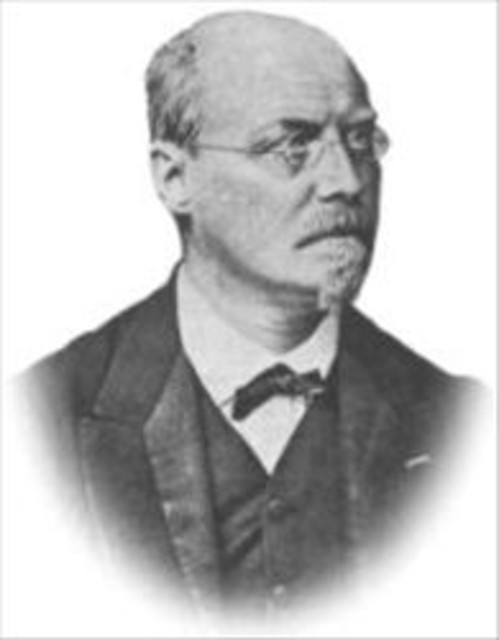
One of several forgotten Romantic composers whose works found a performance renaissance near the twentieth century's end, Joachim Raff was the son of a German organist from Württemberg. The family had modest resources, and Raff's only formal education consisted of teacher-training studies at a Jesuit school. But he was determined on a musical career and taught himself the essentials of composition. Raff eventually sent some of his piano music to Mendelssohn, who recommended them for publication. Encouraged, the young composer moved to Zurich, continuing to teach himself from treatises. In 1845 Liszt played a concert in Basle, and, in a journey reminiscent of Bach's supposed pilgrimage to hear Buxtehude a century and a half before, Raff walked all the way there to hear it. He met Liszt and showed him some of his music; the great virtuoso-composer took Raff back to Germany and got him a job in a music shop in Cologne. However, Raff also became a critic, and his writings so antagonized certain local personalities that he was forced to leave the city. He settled in Stuttgart, where he formed a lifelong friendship with the conductor Hans von Bülow. In 1846 he finally met Mendelssohn and made plans to study with him. However, Mendelssohn died in November of that year. Once again Liszt came to the rescue, finding a job for Raff in Hamburg as a representative of his publisher's firm, Schuberth. When Liszt gained a position as kapellmeister in Weimar, he hired Raff as an assistant. Like most composers, Liszt found the mundane part of the job, like making fair copies of the music to send to printers and extracting parts, to be tedious and uncreative, and he was happy to be able to delegate it to an employee; in addition, Raff orchestrated some of Liszt's early symphonic poems (some of which Liszt revised in later years when he was more skilled at orchestration). In 1856 Raff gave up that position and moved to Wiesbaden to give piano lessons and compose. Raff had closely studied music of past eras, and as a result he saw his mission as one of reconciliation between the latest developments in music and the techniques of the past. Thus, many of his works combine Baroque counterpoint and Classical forms with his own generation's interest in program music. In 1877 Raff was appointed director of the Hoch Conservatory, and held the post until his death. He taught composition; among his pupils was the American, Edward MacDowell. Raff's music was very highly regarded during his lifetime, a judgment that has not been seconded by history. Some commentators of the time ranked him with Wagner and Brahms. His music is well crafted, with brilliant orchestration and strong melodies; in fact, its entertaining qualities, it is now clear, damaged the music's durability by resembling too closely the salon music of the time. He was highly prolific, writing eleven symphonies (most of which have programs), and numerous other symphonic works and concertos. He wrote six operas, four of which have never been performed, and a huge amount of piano and chamber music.
First discovered Sep 1, 2026, 1:44 AM