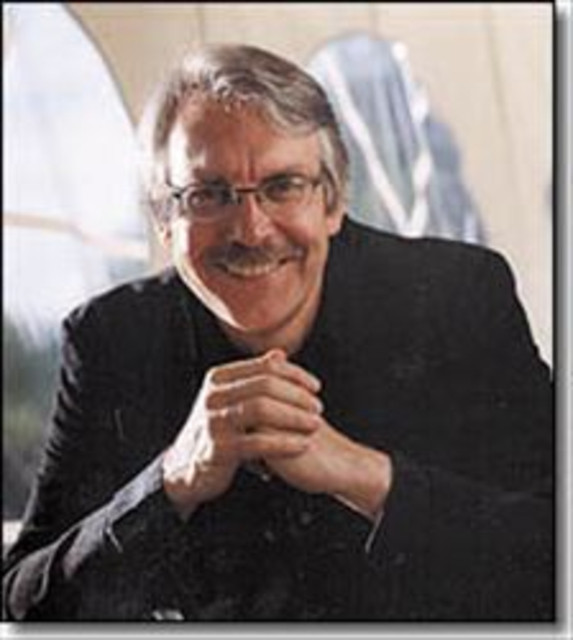
John Harbison
Charts
Tracks
Playlists
SEO
Press Mentions
Overview
Not included in any known risky playlists
Monthly Listeners
Discography
Genres
Spotify has not assigned genres to this artist yet
Top Audiences
Top Listener Locations
 New York City, US11Brooklyn, US9Chicago, US7
 London, GB7Boston, US5
Playlist Summary
Playlist Movement
No activity found
This artist's playlist additions and removals will appear here.
Biography & Metadata
John Harris Harbison is among the most prominent and prolific of American composers; his highly varied and interesting output has earned him the moniker, "the great master of ambiguity." His principal works include three string quartets, three symphonies, the cantata The Flight Into Egypt (Pulitzer Prize, 1987), and three operas, including The Great Gatsby (commissioned by The Metropolitan Opera -- premiered there, 1999). Harbison was born in Orange, NJ, on December 20, 1938, and grew up in Princeton. While a teenager he received musical guidance from Roger Sessions, one of his formative influences, while also developing considerable skills as a jazz pianist. Other of Harbison's teachers include Walter Piston at Harvard, Boris Blacher at the Berlin Hochschule für Musik, and Earl Kim at Princeton. As influential as any teacher was Harbison's marriage to violinist Rose Mary Pederson -- the inspiration for many of his violin pieces. Since 1969, he has been professor of music at the Massachusetts Institute of Technology, necessitating his becoming a "summer composer." More than 30 of his compositions have been recorded on the Nonesuch, Northeastern, Harmonia Mundi, New World, Decca, Koch, Centaur, Archetype, and CRI labels. His music is published exclusively by Associated Music Publishers. Exceptional economy and expressive range mark Harbison's music. His works embrace elements of jazz as well as the early and late Baroque styles of Heinrich Schütz and J. S. Bach. At times, the harmonic palette brings to mind the sound of Prokofiev or the rigorous serialism of 1950s Stravinsky. He is also a practiced writer on the art and craft of composition, and was recognized in his student years as an outstanding poet, later writing the libretto for his The Great Gatsby. Harbison's music first garnered national attention with the Boston Symphony Orchestra's 1976 premiere of Diotima, a commission by the Koussevitzky Foundation. This, his first major work for orchestra, showed him an adept symphonic composer -- a talent that he then applied to a string of concerted works, such as his Piano Concerto (1978) (recipient of the 1980 Kennedy Center Friedheim Award), and the Violin Concerto (1978-1980, rev. 1987), written for and premiered by Rose Mary Harbison. Other concertos came later, including one for viola (1989), oboe (1991), cello (1993), and flute (1993). Occasionally, as in The Most Often Used Chords (Gli accordi più usati) of 1993, Harbison enjoys putting compositional restrictions on himself to ignite his imagination. A great percentage of Harbison's works are for voice -- either solo, small ensemble, or large chorus; most notable among these are his Mirabai Songs (for soprano and percussion ensemble) and his operas, which (besides the aforementioned Gatsby) are: Full Moon In March (1977) and Winter's Tale (1974, rev. 1991). Harbison has worked extensively as a conductor, particularly with the Cantata Singers (1969-1973) and the new-music group Collage (established in 1984). He is a champion of twentieth century music, especially composers he feels have been neglected, such as Luigi Dallapiccola.
First discovered Aug 21, 2026, 6:14 AM