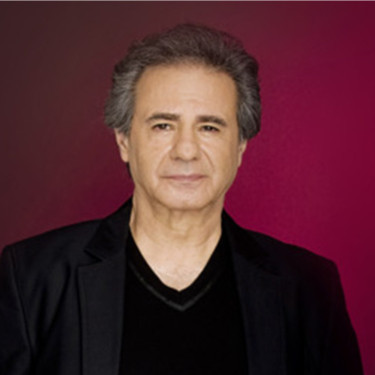
Aref
Charts
Tracks
Playlists
SEO
Press Mentions
Overview
Not included in any known risky playlists
Monthly Listeners
Discography
Genres
Spotify has not assigned genres to this artist yet
Top Audiences
Top Listener Locations
 Frankfurt am Main, DE6,061
 Toronto, CA5,777
 Istanbul, TR5,154
 London, GB3,065Nuremberg, DE2,870
Playlist Summary
Playlist Movement
No activity found
This artist's playlist additions and removals will appear here.
Biography & Metadata
Aref Arefkia ( عارف عارفکیا), known as Aref (Persian: عارف; also Romanized as Āref, born August 10, 1940) is an Iranian pop music singer and former actor. He is known as "The king of hearts" and "The legend of pop" in Iran. He graduated from Tehran Industrial School of Art in 1958. Before starting his career as a singer, Aref worked as a teacher in Qazvin industrial school of art for two years, but the truth is that he has been singing since he was 12 years old. In the 1960s, Aref introduced a new wave of romantic styles to the large spectrum of romantic Persian music. He first lived in London, England, for three years, then moved to Los Angeles, United States. Song Style: In the past, Aref's work was known among music pursuers as "Aref style.". The process of shaping this style was as follows: In the mid-1940s, songs were performed as ballads that had Arabic themes and were mostly needles and gloomy. The course was attended by singers Qasim Jebeli, Manouchehr Shafiee, Alfred Lazarian and Houshang Shokati. Some poets and translators translated the lyrics of the European song "Wow to Wow". Hamid Ghanbari and Jamshid Sheibani were among the first to perform the translated lyrics with the same original song. This style was pop, but it was not Iranian. In the early 1950s, love songs were performed with Western orchestration and Persian theology. This style of songs was presented to the public by Mohammad Noori, Vigen and Manouchehr Sakhaei.
First discovered Aug 21, 2026, 10:42 PM