George London
Charts
Tracks
Playlists
Press Mentions
Google Rankings
Overview
Not included in any known risky playlists
Monthly Listeners
Discography
Top Audiences
Top Listener Locations
 London, GB510
 Madrid, ES281
 Mexico City, MX208Barcelona, ES204
 Berlin, DE200
Playlist Summary
Playlist Movement
Event | Playlist | Botted? | Position | Track | Happened at | |
|---|---|---|---|---|---|---|
Biography & Metadata
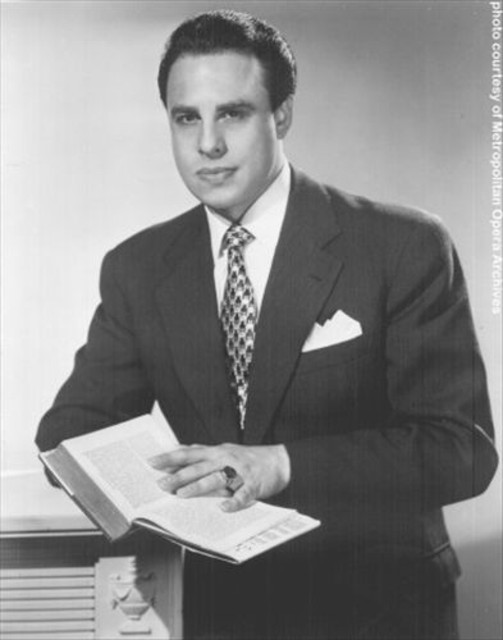
George London was one of the most celebrated singing actors of his generation, with an imposing stage presence. In addition to excelling in a wide range of roles, from Mozart's Don Giovanni to Wotan to Scarpia to Escamillo, he was the first North American singer to appear on the stage of Moscow's Bolshoi Theater, where in 1960 he triumphed in arguably the greatest Russian male role, Boris Godunov. London began his vocal training after his family moved to Los Angeles, when he was 15. He made his operatic debut as Doctor Grenvil in Verdi's La traviata at the Hollywood Bowl, and for a while sang with Frances Yeend and Mario Lanza in the Bel Canto Trio. In 1949, he decided to make his career in Europe, and after an audition with Karl Böhm, joined the Vienna State Opera, where he made his debut as Amonasro, and was an overnight success. He remained a favorite there throughout his career, and was named a Kammersänger. He made his Bayreuth Festival debut the year it reopened, 1951, as Amfortas, and he also appeared there in the title role of The Flying Dutchman. In 1962, he sang the complete Ring in Cologne, under the direction of Wieland Wagner. In 1966, one of his vocal chords became paralyzed, and he retired from singing. However, he remained very active in the musical world. In 1971, he established a foundation for young singers (a list of just the most prominent award recipients includes Renée Fleming, Kathleen Battle, Jerry Hadley, Barbara Hendricks, James Morris, and Dawn Upshaw). He also served as artistic administrator of the Kennedy Center for the Performing Arts (Washington, D.C.) from 1968 to 1971, and executive director of the National Opera Institute from 1971 to 1976, as well as the director of the Washington Opera from 1975 to 1979. In 1975, in Seattle, he staged the first-ever complete Ring Cycle in English.
First discovered Aug 18, 2026, 7:08 PM