Jules Massenet
Charts
Tracks
Playlists
SEO
Press Mentions
Overview
Included in high risk playlists
Monthly Listeners
Discography
Top Audiences
Top Listener Locations
 London, GB21,366
 Mexico City, MX14,337
 Sydney, AU11,402
 São Paulo, BR11,072
 New York City, US9,610
Playlist Summary
Playlist Movement
No activity found
This artist's playlist additions and removals will appear here.
Biography & Metadata
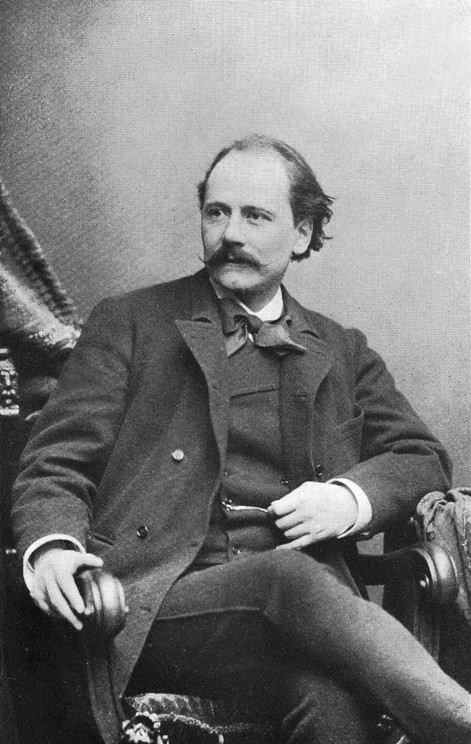
Today Jules Massenet is best known for the operas Manon and Werther and the solo violin Méditation, from Thaïs. During his lifetime, however, Massenet was one of the most prolific and celebrated operatic composers on earth. The public anxiously awaited his output, and Massenet became both wealthy and famous practicing his craft. His legacy endures because of his ability to create music which portrays the intimacy of human relationships and the emotions and conflicts that arise from them. His gift for melody is reflected in a variety of arias that are among the most beautiful in the French operatic repertoire. He was also a brilliant orchestrator, a skill which allowed him to capture the moods and colors of a wide variety of places and eras. In addition to opera, Massenet composed songs, oratorios, ballets and orchestral works, as well as chamber music and works for solo piano. Massenet was born in Montaud, France, to the family of a struggling metal worker. At the tender age of 10, he was admitted to the Paris Conservatory, where he studied with famed operatic composer Ambroise Thomas. In 1863, Massenet won the Prix de Rome, a prize which allowed him to travel and study in Italy. There the young man experienced the sounds and textures of the region and began to compose in earnest. While in Italy, Massenet met Liszt, who introduced him to his future wife, Mademoiselle Sainte-Marie. Massenet's first opera, a one-act entitled La Grand' Tante (The Great Aunt), was produced (with only moderate success) at the Opéra-Comique in 1867. In 1877 Massenet's exotic opera Le Roi de Lahore (The King of Lahore) had a highly successful premiere at the Paris Opera, marking the beginning of his ascendancy as France's most prolific and celebrated operatic composer. In 1878, his former teacher, Thomas, invited him to become a professor at the Paris Conservatory. Massenet achieved considerable success as a teacher, influencing an entire generation of French composers, including Gustav Charpentier and the song composer Reynaldo Hahn. A highly prolific composer, Massenet worked continuously throughout his life, completing a great deal of music in addition to his 25 published operas. His approximately 250 songs often reflect the same melodic ingenuity and expressiveness that define his operatic works. Massenet composed several song cycles, including Poéme d'Avril (April Poem), which is often identified as the first French song cycle. Among the most famous of his solo songs are "Ouvre tes yeux bleus" (Open your blue eyes) and "Si tu veux, Mignonne" (If you wish it, sweetheart). The composer's First Orchestral Suite (originally entitled Symphony in F) premiered in 1867. This was the first of seven suites by Massenet, with programmatic subjects ranging from Alsace (Scènes alsaciennes, 1882) to Hungary (Scènes hongroises, 1871), and from Shakespeare (Scénes dramatiques, 1875) to Fairyland (Scènes de féerie, 1881). The most famous of his orchestral suites, Scénes pittoresques (Picturesque Scenes), was first performed in Paris during March of 1874. Massenet also composed several ballets, including La Cigale, Espada, and Les Rosati. In addition to Marie-Magdeleine, his oratorios include Ève (1875) and La Terre promise (The promised land, 1900). He wrote a considerable amount of incidental music for plays, including Sardou's Le Crocodile (1886) and Racine's Phèdre (1900). His only piano concerto was first performed in 1903 and receives occasional modern performances.
First discovered Apr 4, 2026, 1:26 PM