African Brothers
Charts
Tracks
Playlists
Press Mentions
Google Rankings
Overview
Not included in any known risky playlists
Monthly Listeners
Series
- Monthly Listeners
- Listeners from Playlists
- Change
Discography
Top Audiences
Top Listener Locations
 London, GB435
 São Paulo, BR199
 Sydney, AU186Melbourne, AU181
 Los Angeles, US170
Playlist Summary
Playlist Movement
Biography & Metadata
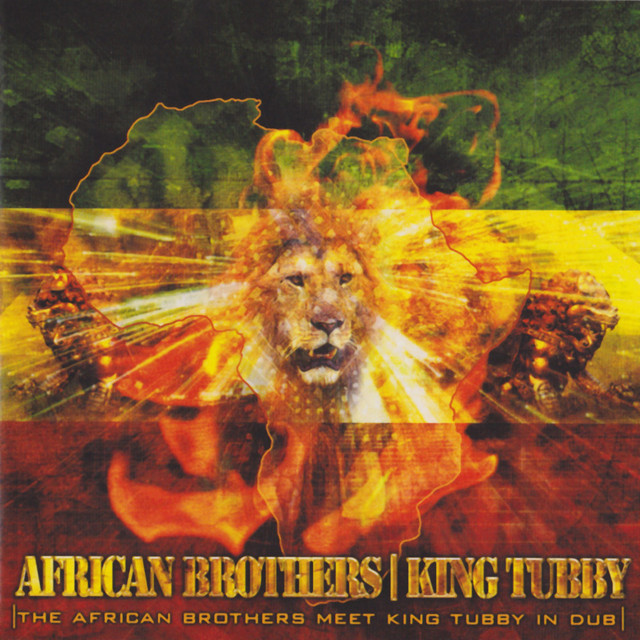
The African Brothers' powerful cultural singles helped lay the foundation for the rise of roots reggae. The group was formed in the late '60s by Derrick "Bubbles" Howard, Dessie "Roots" Young, and Winston "Tony Tuff" Morris -- initially, Howard fronted the band. In this iteration, they cut their first single, "Behold I Love," for C. Hanna. Young left soon after for a solo career, and the remaining Brothers then enlisted eager schoolboy Lincoln "Sugar" Minott. As Morris was the only member with real musical experience, he took over the lead. The trio struggled, but things brightened up in the '70s as a number of producers began taking an interest. The Brothers cut the simmering "Hold Tight" for Clive Chin, the potent "Mysterious Nature" for Rupie Edwards, and a pair of numbers for Duke Thewell, "Party Night" and "Torturing," the latter two their first to have an impact on sound systems. With the African Brothers having modeled themselves after the Abyssinians, Minott was keen to record at Studio One, and the trio finally got their chance in 1971. There they cut "No Cup No Brook," their first and last single for Coxsone Dodd, much to Minott's dismay -- Howard and Tuff were convinced the producer was pocketing their royalties. At this point, the Brothers began self-producing, and a stream of strong singles arrived, many on their own Ital label. "How Long," "Youths of Today" (Minott's debut on lead), "Lead Us Father," and "Righteous Kingdom," the latter two arguably their best and most popular singles, were all released on Ital. Tuff's powerful leads, his bandmates' subtle, close harmonies, and the militant riddims that underpinned their songs all garnered attention, and the trio was approached by several producers with an eye for an album. All were refused, as none offered a recompense the band thought fair. Ahead of their time and musically out of place, the African Brothers disintegrated in the mid-'70s, with Tuff and Minott launching solo careers and Howard moving into production. Their singles left their mark, but without an album, their name soon faded. Easy Star righted that injustice in 2001, bundling most of their crucial singles for the Want Some Freedom compilation, while Nature Sounds rounded up their dubs for 2005's African Brothers Meets King Tubby in Dub set. ~ Jo-Ann Greene, Rovi
First discovered Sep 17, 2026, 4:04 PM