Giovanni Paisiello
Charts
Tracks
Playlists
SEO
Press Mentions
Overview
Not included in any known risky playlists
Monthly Listeners
Discography
Genres
Spotify has not assigned genres to this artist yet
Top Audiences
Top Listener Locations
 Madrid, ES443
 Mexico City, MX391
 London, GB385
 Santiago, CL355
 Paris, FR285
Playlist Summary
Playlist Movement
No activity found
This artist's playlist additions and removals will appear here.
Biography & Metadata
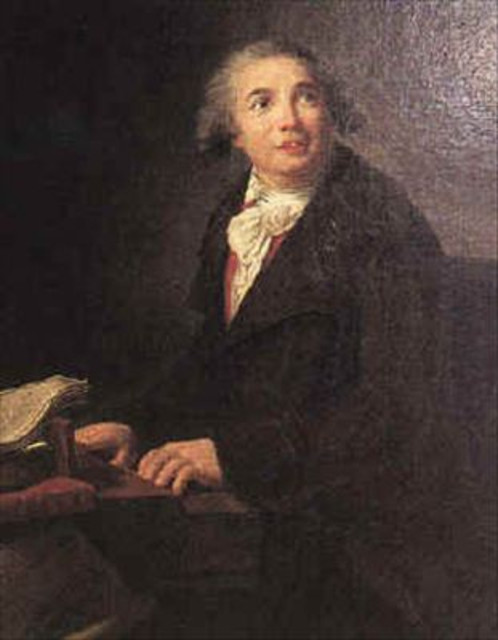
As the eighteenth century operatic scene that surrounded and influenced Mozart emerged into clearer view, Giovanni Paisiello was recognized as one of its most significant shapers. He began composing opera as soon as he left the Conservatory of San Onofrio in Naples in 1763. In Naples he soon became established as a popular local composer. He was noted for simplifying operatic style in the interests of getting more quickly to the plot and keeping it moving. His librettist Giambattista Lorenzi crafted fast-moving, usually humorous plots as well as larger, dramatic operas. His tendency towards concision was strengthened when he accepted employment in the court of Catherine the Great of Russia in 1776. She demanded that productions in her theater last no more than an hour and a half. He strove to make his melodies more appealing, his orchestration more colorful, and make the music help illustrate the plot. Young Mozart studied Paisiello, greatly benefiting his own style. In 1781 Paisiello wrote an intermezzo-opera, La serva padrona (The Serving-wench Mistress), and, in 1782 the Il barbiere di Siviglia (The Barber of Seville). Mozart quickly wrote a sequel to it, Le nozze di Figaro. Paisiello, who had been secretly prospecting for a job in Naples, left Russia on leave (pocketing a year's advance pay), and took up his new post as court theater composer to King Ferdinand IV of Naples. He never returned to Russia. King Ferdinand granted him liberal and generous employment terms. In 1799, Ferdinand was overthrown and fled with his court to Sicily. Paisiello stayed behind and received the post of the rebel Republic's "National Music Master." The King raised an army and re-took Naples five months later. Paisiello was fired, even though he insisted that he had not asked for nor wanted the appointment. He was reinstated in 1801. Then Paisiello learned that Napoleon admired his music. In 1802 he left for Paris to take a job with Napoleon, somehow persuading Ferdinand to keep his salary going. In 1804 Napoleon permitted Paisiello to return to Naples. After some wrangling, Paisiello got a French pension for his two years of work. In 1806 Joseph Bonaparte ousted Ferdinand and became king of Naples. Paisiello got most of the top musical jobs King Joseph gave out. In 1815, when he was 75, Paisiello's sun set. As all of Napoleon's little kingdoms collapsed, the resilient Ferdinand returned to his throne, and Paisiello was kicked out of all his jobs except for a chapel position. The Napoleonic pension was repudiated by the restored French monarchy; and in that year Rossini's new version of Il barbiere di Siviglia swept Paisiello's off the boards, beginning a long period when the older composer was entirely ignored and nearly forgotten. Paisiello's Barber barely hung on by dint of sporadic revivals. When it was recorded in the 1960s, listeners recognized its true merit. It has regained a limited place in the repertory, along with Serva padrona, L'Inganno felice, and a few other Paisiello works.
First discovered Aug 18, 2026, 3:35 PM