Frederick Fennell
Charts
Tracks
Playlists
Press Mentions
Google Rankings
Overview
Not included in any known risky playlists
Monthly Listeners
Series
- Monthly Listeners
- Listeners from Playlists
- Change
Discography
Top Audiences
Top Listener Locations
 Mexico City, MX652
 Chicago, US607
 Berlin, DE591
 Madrid, ES558
 Santiago, CL514
Playlist Summary
Playlist Movement
Biography & Metadata
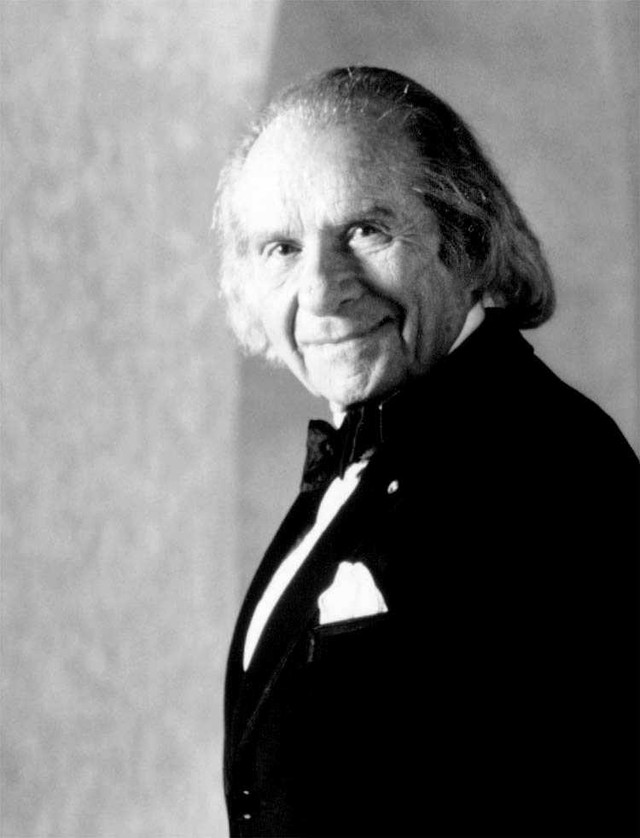
The growing number of serious compositions for wind ensemble, and the large number of institutionalized ensembles to play them, are in large part due to the efforts of Frederick Fennell. Though his career took him to the orchestral podiums of Cleveland, Boston, Miami, and elsewhere, it is his notoriety as a conductor of music for winds, his prolific recorded output, and his role as the founder of the Eastman Wind Ensemble that perhaps most strongly denote his career. Fennell was born in Cleveland in 1914. After high school, he entered the Eastman School of Music, pursuing a degree in percussion performance from the only institution in the country to offer one at that time. Fennell became a fixture at Eastman, going on to receive a master's degree in 1939, and being hired in that same year to conduct several instrumental ensembles; he remained at Eastman until 1965. During his years there he transformed concert band into a multifaceted musical wind ensemble that could tap into the large body of long overlooked wind and brass concert music, and establishing a unique tradition and sonority for which new works could be created. His ideas first took shape in 1951, when under his baton a group of woodwind, brass, and percussion players staged a concert featuring several works from composers as wide-ranging as Adrian Willaert, Orlando di Lasso, Giovanni Gabrieli, Mozart, and Beethoven. Fennell not only resurrected "lost" works, but gave due attention to new ones: Stravinsky was represented, as was the American composer Carl Ruggles. "This program," wrote Fennell, "argues strongly against the old complaint leveled against wind instruments that there is no music written for them which is of sufficient interest to make anyone care to hear it performed." And thus the Eastman Wind Ensemble was born. The growth of wind ensembles and wind music was also aided by Fennell's and the Eastman Wind Ensemble's impressive output of recordings. Raoul Camus, documenting Fennell's career for the New Grove Dictionary of American Music, observed that "Fennell's pioneering series of 24 recordings for Mercury brought about a reconsideration of the wind medium and established performance and literature models for the more than 20,000 wind ensembles that were subsequently established in American schools." Fennell's innovations appear in retrospect to be part of a larger effort in the mid-20th century to establish a distinctive American musical sound and identity. It was during Fennell's years at Eastman that his colleague Howard Hanson established an annual symposium to foster new American music for orchestra -- a project that inspired a similar effort on Fennell's part, to elicit works for winds from American composers. Fennell definitely saw his wind ensemble project as a patriotic contribution to Western culture. "Granting the rich inheritance with which the American music heritage began [that is, the inheritance of the European musical tradition], it is not surprising that we finally have emerged as a people worthy of that legacy." In creating an ensemble that could variously serve an educational function, execute original and transcribed works from the Western canon, and foster the creation of new works (and, as evidenced by the widely ranging styles within subsequent wind repertories, entirely new sonorities), Fennell helped define the character of American music, and the role of music in American society.
First discovered Aug 24, 2026, 6:41 PM