Rudolf Serkin
Charts
Tracks
Playlists
SEO
Press Mentions
Overview
Not included in any known risky playlists
Monthly Listeners
Discography
Top Audiences
Top Listener Locations
 Mexico City, MX398
 London, GB355
 São Paulo, BR296
 New York City, US264
 Santiago, CL245
Playlist Summary
Playlist Movement
No activity found
This artist's playlist additions and removals will appear here.
Biography & Metadata
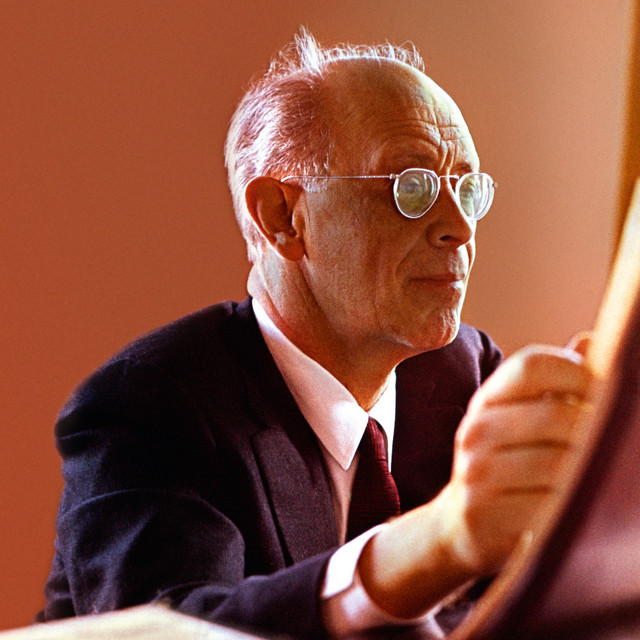
Rudolf Serkin emerged from the environment of post-World War I Austria to become one of the most profound and challenging pianists of the century, leaving a lasting impression on following generations. Childhood studies in Vienna with Richard Robert for piano, and Joseph Marx and Arnold Schoenberg for composition, led to a 1915 debut performance with the Vienna Symphony Orchestra at the age of 12. After 1920, Serkin was associated with noted violinist Adolf Busch, both as a duo-sonata partner, and with the Busch Chamber Orchestra (and, from 1935, as Busch's son-in-law). An American debut in 1936 with the New York Philharmonic under Toscanini led to Serkin's decision to relocate to the U.S. in 1939. Invited to join the piano faculty of the Curtis Institute of Music, he quickly rose to become head of the piano department, and, from 1968, president of the Institute. He devoted his summers to cultivating several generations of young musicians at the Marlboro Festival in Vermont. Many observers have remarked that Serkin was not a natural pianist. Indeed, he seemed rather to play by force of will alone, and the strength of his musicianship lay more in the deep insight that he brought to the music of the composers he held dearest -- traditional Austrian and German masters -- than in virtuosic pianism. In Beethoven's sonatas, Serkin found particular inspiration. His Beethoven interpretations do not necessarily please the listener in terms of superficial "beauty," but rather convey the unique mixture of logic, violence, and spiritual transcendence that he feels is the essence of Beethoven's work. In the Brahms concerti, Serkin's vision was nothing short of titanic. On off-nights, however, Serkin's lofty, cerebral brand of pianism sometimes failed him, and the austere, "square" approach to phrasing that makes his playing so immediately recognizable sometimes sounded unnecessarily harsh. Rudolf Serkin's discography is impressive, spanning most of the general repertory from Bach to the early/mid-20th century, and including such relative novelties as the F minor Concerto of Max Reger, a composer Serkin had an abiding affinity for. His work at the Curtis Institute, and, during the summers, at the Marlboro Festival, made him one of the most influential American teachers of the post-World War II era. Serkin's son Peter was also a pianist of considerable renown. ~ Blair Johnstone, Rovi
First discovered Sep 13, 2026, 9:03 AM