Julius Eastman
Charts
Tracks
Playlists
Press Mentions
Google Rankings
Overview
Not included in any known risky playlists
Monthly Listeners
Discography
Genres
Spotify has not assigned genres to this artist yet
Top Audiences
Top Listener Locations
 London, GB405
 New York City, US303Brooklyn, US265Los Angeles, US200
 Berlin, DE185
Playlist Summary
Playlist Movement
Event | Playlist | Botted? | Position | Track | Happened at | |
|---|---|---|---|---|---|---|
Biography & Metadata
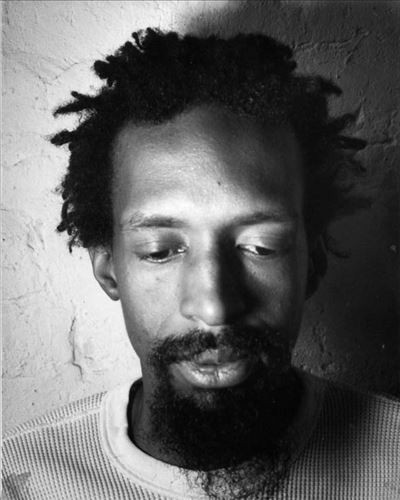
The music of African American composer Julius Eastman has been revived increasingly often since his death in 1990. Eastman was a pioneer not only as an openly gay and Black composer in the 1970s but also as one who incorporated elements of free jazz and pop into a minimalist compositional language. Eastman was born in New York City on October 27, 1940, but grew up in Ithaca, New York. He took up the piano when he was 14 and progressed rapidly, studying at Ithaca College and then at the Curtis Institute of Music in Philadelphia, where he studied piano with Mieczyslaw Horszowski and composition with Constant Vauclain. Eastman switched his major from piano to composition during this period but remained active as a pianist, performing at Town Hall in New York in 1966. He was also a singer who recorded Peter Maxwell Davies's Eight Songs for a Mad King for the Nonesuch label in 1973. With backing from composer Lukas Foss, who conducted some of his music, Eastman taught theory and composition at the State University of New York at Buffalo. He joined the Creative Associates program there and co-founded the S.E.M. Ensemble with Petr Kotik. Stirring up controversy (and Cage's disapproval) with a performance of John Cage's Song Books into which he incorporated homoerotic elements and perhaps generally unsuited to academic settings, Eastman left Buffalo in 1975. Moving to New York City, Eastman made inroads into both the "uptown" traditional classical music and "downtown" experimental scenes. The late '70s and early '80s were among his most prolific years. Sometimes giving his works provocative titles like Gay Guerrilla, Eastman forged a style that was rooted in minimalism but sometimes drew on pop or on modern jazz styles such as saxophonist Ornette Coleman's free jazz. He is regarded as a forerunner of postminimalism. Eastman described his music as organic in structure, developing out of elements laid out at the beginning of a work. He gained considerable attention in New York and beyond. In 1986, choreographer Molissa Fenley used works by Eastman and Philip Glass in her dance work Geologic Moments. Eastman, however, grew despondent over the lack of professional opportunities he encountered, and he began to abuse drugs. He was homeless for a time, living in New York's Tompkins Square Park, and when he was evicted from an apartment, he lost many of his music manuscripts. Eastman died of cardiac arrest in Buffalo on May 28, 1990. His death was almost unnoticed; eight months later, music critic Kyle Gann wrote one of his few obituaries. For some time, Eastman's music was forgotten, but he began to receive new performances in the late 2010s, and by 2021, more than ten of his works had been recorded. The Los Angeles chamber group Wild Up issued a recording of Eastman's Femenine in 2021, and it was named one of the best classical recordings of the year by the U.S. National Public Radio network. ~ James Manheim, Rovi
First discovered Aug 20, 2026, 8:09 PM