Alma Cogan
Charts
Tracks
Playlists
Press Mentions
Google Rankings
Overview
Not included in any known risky playlists
Monthly Listeners
Series
- Monthly Listeners
- Listeners from Playlists
- Change
Discography
Top Audiences
Top Listener Locations
 London, GB1,581
 Stockholm, SE1,466Gothenburg, SE1,222Malmö, SE860
 Sydney, AU679
Playlist Summary
Playlist Movement
Event | Playlist | Botted? | Position | Track | Happened at | |
|---|---|---|---|---|---|---|
Biography & Metadata
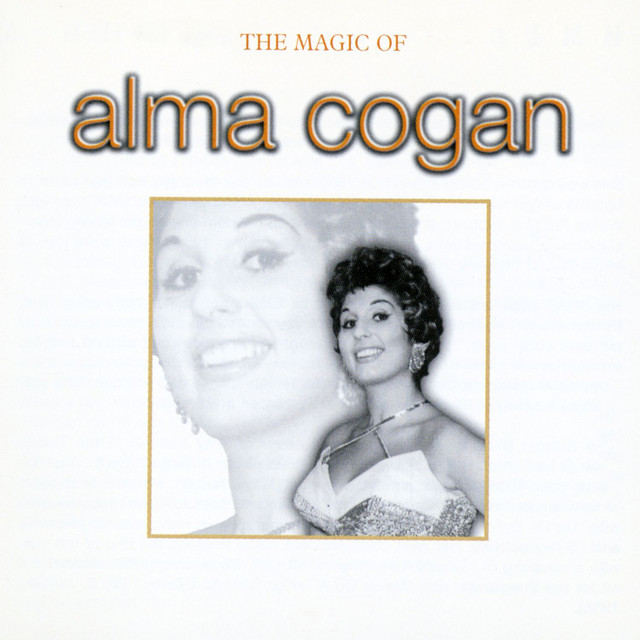
Alma Cogan was one of the most successful and tragic figures in English pop music of the '50s and early '60s. Her 18 chart hits were a record for a female singer at the end of the '50s in England, and despite being part of the pre-rock & roll era, Cogan seemed capable of working with the new music when her life was cut short. The daughter of a haberdasher, Alma Cogan was born in St. John's Wood and educated at St. Joseph' Convent School. It was Cogan's mother who pushed her toward a career as a singer and onto the stage. In 1948, at age 16, she was spotted in the chorus of High Button Shoes by EMI staff producer Walter J. Ridley (also responsible, a decade later, for signing Johnny Kidd & the Pirates), who subsequently signed her to the HMV label. Around this same time, she began appearing with cabaret at the Cumberland Hotel. Cogan began her career doing ballads, but her first hit was a novelty tune called "Bell Bottom Blues" (not the Derek & the Dominoes song), which got to number five on the British charts in 1954. A year later, she topped the charts for the first and only time with "Dreamboat." She also covered several American hits, including "The Birds and the Bees" and "Why Do Fools Fall in Love," which was a hint of the range she would show in her later career. By the turn of the '50s into the '60s, she was also the star of her own television program, and she reached the apex of her success when Lionel Bart (whom, at one point, she apparently intended to marry) cast her as Nancy in Oliver! Her name receded from the pop charts somewhat in the early '60s, as younger performers such as Helen Shapiro joined the EMI roster, but Cogan was a fixture as a concert attraction during the first half of the decade. During the '50s, Cogan attracted press attention as a personality beyond her singing, for her sense of humor and for her collection of luxurious clothes -- it was said that she never wore the same dress twice -- and her home was filled with an extraordinary array of fashions. By the mid-'60s, she was much more celebrated in the gossip columns for the all-night parties she threw at her Kensington High Street home, where guests included such diverse figures as Stanley Baker, Paul McCartney, Roger Moore, Noël Coward, Ethel Merman, and Lionel Bart, among many others. If she was no longer a chart-topping star, Cogan was still a much-loved figure to her peers, and remained in touch with the cutting edge of the popular music business, recording the music of Burt Bacharach when he was still getting established, and befriending McCartney, who must've loved making the acquaintance of EMI's biggest female pop star from the period in which he was growing up. McCartney contributed percussion to the B-side of one of her mid-'60s singles, which resulted in her covering "Eight Days a Week," as well as "Yesterday," "I Feel Fine," and "Ticket to Ride." There's no telling where that friendship might've led -- Cogan could easily have been another, more mature Cilla Black, her voice serving as an outlet for McCartney songs that weren't suited to the Beatles. If her version of "Eight Days a Week" -- a most startling re-thinking of the song, transforming it into a gloriously lyrical torch number -- is any indication, she might've done wonderful, glorious things with "For No One," "Your Mother Should Know," and "When I'm Sixty-Four." Alas, it was not to be. Cogan had just proved capable of making the transition to a more rocking sound, or at least of embracing some components of the last few years of changes in music, when tragedy struck. In 1966, she was diagnosed with cancer. She received treatments and planned to continue her career, even writing several songs (under the name "Al Western") that were recorded by other singers. She kept working during the year, and an album was intended. Cogan continued concertizing, and while touring Sweden, she fainted. She was diagnosed as terminally ill, and died on October 26 of that year in a London hospital. Her final album, Alma, was released early the following year, but Cogan was never entirely forgotten. Collections of her music have shown up throughout the CD era, including a complete triple-CD anthology (A-Z of Alma). In 1992, the BBC presented a television documentary about her life and career. ~ Bruce Eder, Rovi
First discovered Sep 3, 2026, 4:29 AM