Josh White
Charts
Tracks
Playlists
SEO
Press Mentions
Overview
Not included in any known risky playlists
Monthly Listeners
Discography
Top Audiences
Top Listener Locations
 London, GB103
 New York City, US84
 Sydney, AU71
 Stockholm, SE65Chicago, US63
Playlist Summary
Playlist Movement
No activity found
This artist's playlist additions and removals will appear here.
Biography & Metadata
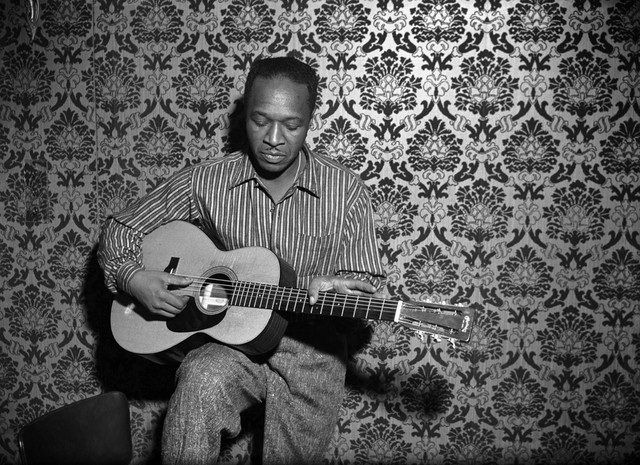
To many blues enthusiasts, Josh White was a folk revival artist. It's true that the second half of his music career found him based in New York playing to the coffeehouse and cabaret set and hanging out with Burl Ives, Woody Guthrie, and fellow transplanted blues artists Sonny Terry & Brownie McGhee. In Chicago during the 1960s, his shirt was unbuttoned to the waist à la Harry Belafonte and his repertoire consisted of folk revival standards such as "Scarlet Ribbons." He was a show business personality -- a star renowned for his sexual magnetism and his dramatic vocal presentations. Many listeners were unaware of White's status as a major figure in the Piedmont blues tradition. The first part of his career saw him as apprentice to some of the greatest blues and religious artists ever, including Willie Walker, Blind Blake, Blind Joe Taggart (with whom he recorded), and allegedly even Blind Lemon Jefferson. On his own, he recorded both blues and religious songs, including a classic version of "Blood Red River." A fine guitar technician with an appealing voice, he became progressively more sophisticated in his presentation. Like many other Carolinians and Virginians who moved north to urban areas, he took up city ways, remaining a fine musician if no longer a down-home artist. Like several other canny blues players, he used his roots music to broaden and enhance his life experience, and his talent was such that he could choose the musical idiom that was most lucrative at the time. ~ Barry Lee Pearson, Rovi
First discovered Sep 17, 2026, 4:27 PM