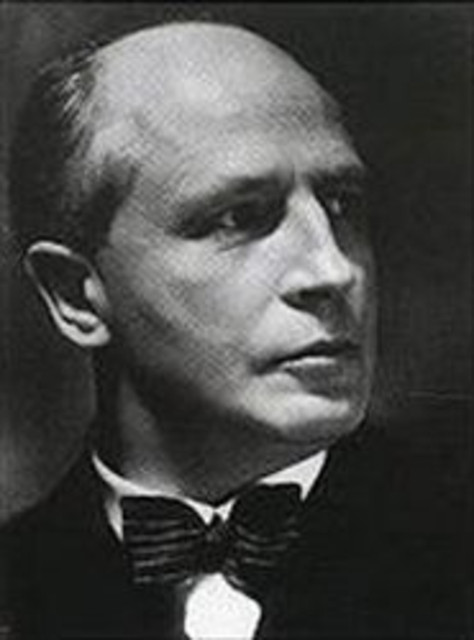
Carl Schuricht
Charts
Tracks
Playlists
Press Mentions
Google Rankings
Overview
Not included in any known risky playlists
Monthly Listeners
Discography
Genres
Spotify has not assigned genres to this artist yet
Top Audiences
Top Listener Locations
 New York City, US23
 Vienna, AT22
 Mexico City, MX22
 Munich, DE21
 Tokyo, JP18
Playlist Summary
Playlist Movement
Event | Playlist | Botted? | Position | Track | Happened at | |
|---|---|---|---|---|---|---|
Biography & Metadata
Carl Schuricht was a distinguished German conductor of the 20th century. He was also a champion for new music, and an important figure in the history of Wiesbaden. He was born in Danzig in 1880 to a musical family of organ builders. His father died weeks before he was born, and he was raised by his mother Amanda. She was a well-known singer, and she taught him how to play the piano. He also learned the violin and by the time he was 12 years old, he had already composed two operas, complete with original librettos. Schuricht started his first professional appointment in 1901 as the choral conductor at the Stadttheater of Mainz. The following year, he won a composition competition that enabled him to continue his musical education. That fall, he enrolled at the Berliner Musikhochschule where he studied piano with Ernst Rudorff and composition with Heinrich van Eyken. This was followed by further studies under Max Reger in Leipzig. He gained experience as a choral conductor and repetiteur at theaters in Mainz, Dortmund, and in the surrounding areas. He also learned from attending the performances of other great conductors of the time including Arthur Nikisch, Felix Mottl, and Gustav Mahler. In 1911 he became the conductor of the municipal orchestra in Wiesbaden, and he was promoted to Generalmusikdirektor in 1921. In this position he organized music festivals featuring modern composers such as Mahler, Reger, and Delius. He was passionate about performing new music and he went through great lengths educating audiences with lectures about the works before the performances. Because of his efforts, Wiesbaden became internationally known as an important cultural center for music. Throughout the '20s and '30s, he remained in his position at Wiesbaden, and he also accepted guest conductor positions with several other ensembles, including the Frankfurt Radio Symphony Orchestra, the Vienna Philharmonic Orchestra, and the St. Louis Symphony Orchestra. Schuricht and his fiancé moved to Crans-Montana, Switzerland in 1944 to escape the Nazi forces and got married shortly after their arrival. He participated in the Lucerne Music Festival, and he worked with l'Orchestre de la Suisse Romande. After the war ended, he resumed his career as a guest conductor with most of the major orchestras in Germany, Austria, and London. In 1956 he led the Vienna Philharmonic on its first tour to the Unites States, and he completed a recording of Beethoven's complete symphonies in 1958. He conducted into his final years and passed away in 1967 in Switzerland. He was buried in Wiesbaden and made an honorary citizen there. ~ RJ Lambert, Rovi
First discovered Sep 13, 2026, 4:52 AM