Nahawa Doumbia
Charts
Tracks
Playlists
SEO
Press Mentions
Overview
Not included in any known risky playlists
Monthly Listeners
Discography
Genres
Spotify has not assigned genres to this artist yet
Top Audiences
Top Listener Locations
 Abidjan, CI2,780
 Bamako, ML2,224
 London, GB1,019
 Paris, FR700
 Conakry, GN573
Playlist Summary
Playlist Movement
No activity found
This artist's playlist additions and removals will appear here.
Biography & Metadata
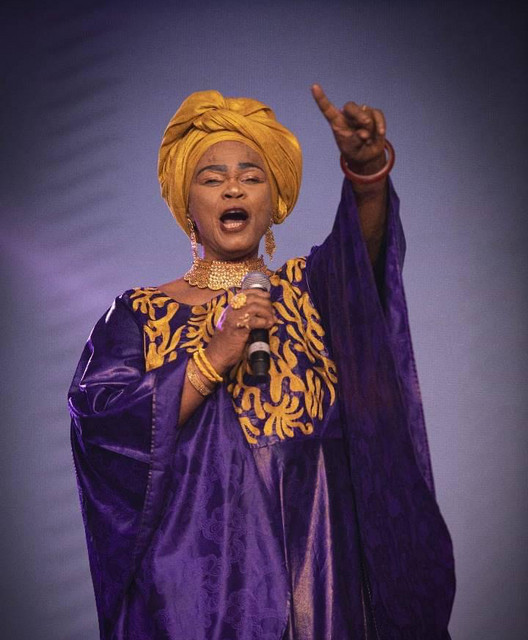
The year 2000 saw Nahawa Doumbia establish herself as one of the leading singers of Wassoulou music, as the pentatonic sound of southern Mali is known. A haven of strong women vocalists, Doumbia's Yaala album and her collaboration with French DJ Frederic Galliano pushed her firmly into the public eye. Born in Mafélé, near the border with the Ivory Coast, Doumbia was raised by her grandmother, her mother having died shortly having given birth to her. But before she died, she predicted her daughter would be a singer -- something surprising, since she didn't come from the jeli caste, the hereditary singers. It was something her grandparents tried to fight, but it seemed as if the prediction was correct. Doumbia would sing with her friends, and was eventually discovered in 1980 by civil servants from the country's Ministry of Culture, and persuaded to sing in the National Youth Week, organized by the Ministry to discover new talent. Doumbia won the contest, singing "Tinye De La Laban," which brought government support for her singing, allowing her to develop her style, based on the traditional didadi rhythm of her native region. Even so, it wasn't until 1988 that she issued her first album, Didadi (1989 U.S. release). It's very Western gloss was at odds with the rootsiness of her voice. Two years later, she brought things more back to the ground, collaborating with a host of African talent, such as guitarist Rigo Starr and members of Salif Keita's band. Mangoni, in 1993, followed a similar plot line. Her voice had developed, but she hadn't really found her individuality yet. That started to flower with Yaknaw in 1997, which unleashed a true Wassoulou sound, similar to that of Oumou Sangare, who'd already gone on to international success. Like Sangare, Doumbia is a feminist, her lyrics powerfully against polygamy, for the rights of women and children, and they received an airing on 1999's Bougouni. The finest flower, however, came with Yaala. Working with her band, who played largely traditional instruments, plus French producer/guitarist Claude Barthélémy, she forged a truly incisive sound, that captured her voice at the height of its power. It came at the same time as she was featured on Frederic Galliano's Frikyawa Collection 1, taking tracks from the French label Cobalt, and remixing them to dancefloor effect. Doumbia also played U.S. dates with Galliano augmenting her band on turntables and effects, for a real marriage of the ancient and modern that brought as much press and praise as Yaala. ~ Chris Nickson, Rovi
First discovered Aug 25, 2026, 1:29 PM